Posts Tagged ‘cabo pearce’

We finished the day strong with an adrenalin inducing night snorkel with feisty silky sharks – Captain and crew blog – May 23, 2010

Sunday, May 23rd, 2010

The sea state was actually not too bad when I woke up this morning at 0530 for my turn on watch. A fairly long 6-10′ from the NW which we were riding over quite smoothly. I must have done something to upset the ocean G*ds though because around 20 minutes after I stepped onto the bridge the wind started blowing, leading to our present state, with a stiff 20-25 kts from the NW, turning the original long 6-10′ into a choppy 8-12′. Not what I was hoping for on this transit north, but certainly nothing that this ocean going vessel can’t handle, just a little lumpier than our guests were anticipating. After departing Roca Partida we have spent the last three days diving at Isla Socorro and Isla San Benedicto, and have had some superb dives. Pta Tosca on the west side of Socorro delivered a beautiful morning dive with 2 Giant Pacific Mantas spending nearly the entire dive sharing themselves between all of the divers in the water, circling around and overhead, and making eye contact as they cruised by only a few feet away. The afternoon at Pta Tosca was not so hot, with visibility diminishing and our manta pals moving on to other more important things apparently. However we did finish the day strong with an adrenaline inducing night snorkel with around 6-8 feisty silky sharks!

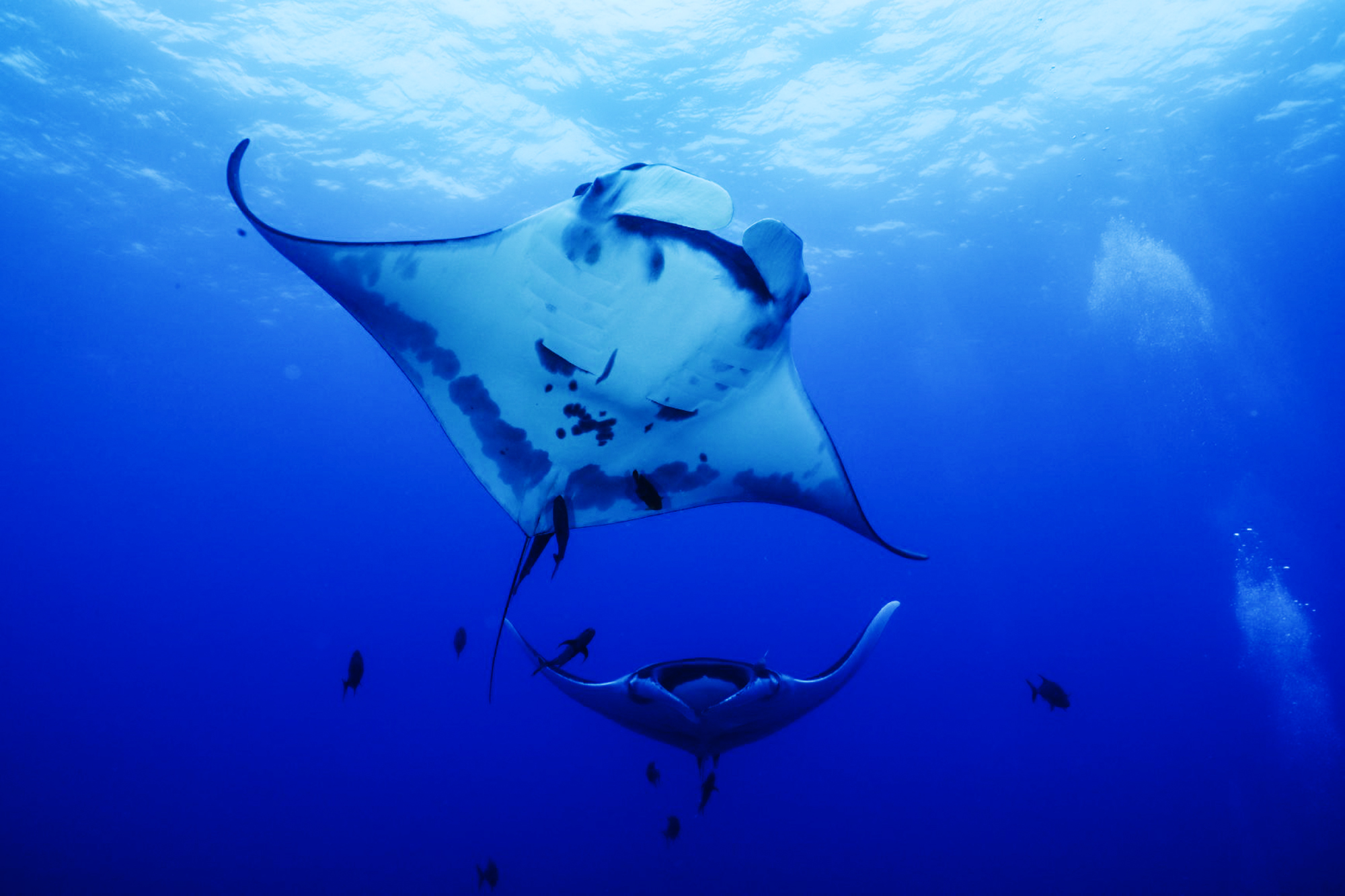
Up next was Cabo Pearce, where we stayed a full day and completed 4 great dives. The day began with an amazing dive featuring 30-50 schooling hammerheads AND 6 Giant Manta Rays, all of which circled closely giving all the divers in the water some great Manta lovin’. Visibility was great at around 80ft/24m and our 6 lovely Mantas stuck around for dives 2 and 3, with at least 4 of them being ‘players’, coming in very close and providing some great interaction. Also had a couple brief dolphin sightings, a couple solitary hammerheads, and a huge school of Bonito that swam by in the blue and seemed to go on and on forever. By dive 4 the current had increased to very strong and the big animals said their goodbyes. We rounded out the Socorro part of our itinerary with a day at San Benedicto. After a very brief and murky dive at the canyon we spent the rest of the day at the Boiler, having some more great Manta interaction, this time with one ‘player’ and one ‘dancer’, one interacting with divers while the other showed off its agility with moves that would have made a stealth bomber look bad. A couple of big Galapagos sharks cruised around on dive 4, eliciting some high fives for our divemasters after the dive!

Now on to the Sea of Cortez. ETA for our first divesite is 0800 tomorrow morning, and we’re all looking forward to the very small seas forecast for the next few days of diving on the east side of Baja California Sur. More to come from the Sea of Cortez.

Captain Gordon Kipp

Surface conditions: Wind moderate (avg 15 kts), sea state at Socorro small to moderate (5-7′ swell), air temp 75-80F, mostly sunny

Diving conditions: Visibility  poor at Canyon (10ft/3m), to excellent at the Boiler (80-100ft/24-30m) and everything in between, water temp 76f, current mild to very strong.

I’m the newest deckhand on board the Nautilus Explorer. I began working here just under a month ago, and every day has been filled with wonderful experiences followed by beautiful sunsets. On my way here I was worried about fitting in with the crew as they are a very close group – almost like family. However, my fears were groundless. As soon as I arrived, they began showing me the ropes (ha!) and were very understanding during my learning curve.

In the past few weeks I have seen all sorts of interesting creatures, both from the surface and underwater. At San Benedito, I saw manta rays and whale sharks from the surface, and a moray eel underwater. At Roca Partida, I watched magnificent frigate birds stealing fish from masked boobies as I waited for the divers to surface. While we were en route to the Nautilus dolphins frolicked in my wake. At Socorro Island I again saw mantas but this time underwater – truly awe-inspiring. We also did a night snorkel with silky sharks, which was incredible. Film doesn’t quite pass on the atavistic shiver when you see a 6 foot shark swimming towards you out of dark sea. Upon leaving the Revillagigedo Archipelago we continued on toward the Sea of Cortez, where I swam with sea lions, and saw vultures and sea hawks circling.

Truly it is a privilege and a pleasure to work here regardless of  the long hours. It is more a way of life then a job.
Thanks for reading!
Tess Szostakiwskyj
Deckhand on the Nautilus Explorer April – June 2010

Landing on top of giant manta rays on our first dive -Divemaster and guest log – english & spanish – April 4 – 5, 2010.

Tuesday, April 6th, 2010

We came up at Cabo Pearce after our traditional navy inspection. Setting the anchor with a decending line for making it it easy for divers out on the lava finger that have been poured out from Socorro Islands Mount Everman. We dive it down for our scuba divers and move it to the place close the cleaning stations so we can maximize our bottom time and air as it is fairly deep. A bit of effort especially a day like today when it was what we say here a little bit “windy” underwater, but then the line makes it as well safe to hand by hand working your self slowly  and safe and not getting swept away from the dive site.

I like Cabo Pearce cause if you don’t like current dive we can dive by the same lava flow that has a nice cheer wall and no current at all. It does not have as much pelagic life like the sharks and Tunas, but often mantas and I have seen diving humpback whales passing by the wall with a few ocations. Today we got the best result for us who dived the easy one. We dropped straigt on a manta at 60 ft she liked us direct and stayed with us and cirkeled us over and over again left and 5 minutes came back and in the end of the dive a second manta cirkeled us. During the whole dive we have moved a distance of 40 m no more. You can chase all over , but often it works best to take a good spot and sit and wait and see what comes. The rest of the day was a bit harder on the big animals. A few hammerheads sharks and passing mantas nice humpback whale songs. A few dolphins came in and had a look at us but not the once that we play with her, wonder where she is this dolpins that have been giving me a hug with her pectoral fins pulling me backward holding my fins… A Tiger shark passed over our heads in a quick pass, nice to see they are here and a few silvertips came in when we wispered them in.

On our  Humpback whale trip we had both in water sighting some with beautiful film shots from some of our guests and above water close sights. But some times you need patience, but here some times it can be so many that you dont know wich whale group you will try to approach.

We had two good days at Punta Tosca and now looking forward to Roca Partida Diveguide Sten.

Surface conditions: 30 C calm seas cloudy with some sun.
Underwater conditions: viz was down to 40 ft temp 24-25 c 76 F Strong current out on the outside lava finger.

La danza de las mantas fue el dia de hoy acompanada por el dulce canto de las ballenas, Punta Tosca nos trajo un sonido de esperanza y dulzura de la naturaleza, un atardecer acompanado de fotos y experiencias compartidas, que mas se puede pedir….
Susana B.

Hoy en Punta Tosca, trabajamos haciendo los censos de peces en invetebrados acompanados de tres mantas, que transmitieron su tranquilidad e hicieron de nuestro trabajo un dia de relajacion, que convinado con el azul del oceano, nos dan mas ganas de seguir explorarando las bellezas del oceano, aunado a esto, tuvimos musica de fondo, el canto de las ballenas que te hacian sentir la vibracion circundante, haciendo mas placentero el dia…. trabajando en el oceano, disfrutando de las bellezas arrecifales, mantas, y cantos de ballenas, es un trabajo que muchos me han de estar envidiando, me encanta mi trabajo jejeje…
Arturo Bocos.

Today in our dive in Punta Tosca we had a very beautiful sunlight dance with a big manta playing with us for several minutes. We had then the opportunity to face humpback whales and dolphins, both mom and baby that came near us during our morning zodiac trip …

Well, today was the day we all came here for. All of the divers had multiple manta sightings, a few hammerhead shark sightings, whale songs all day and for the icing on the cake, in-water humpback whale encounters! We still have the night-time silky shark snorkel ahead of us. We’ll remain anchored in the same protected bay overnight and will hopefully do it all again tomorrow. In-between all of this diving we have been pampered by the crew of the Nautilus Explorer, non-stop. Fantastic meals and snacks after every dive. Every crew member onboard does their best to accomodate every guest’s wish. It’s going to be real hard to go back home after this!
John D.

First dive this morning was awesome. At the bottom of the line was our first manta waiting. As we made our way up the ridge we encountered a large male green turtle, before coming across two more mantas hovering above the ridge. Back near the ascent line a curious bottlenose dolphin cruised by taking a good look at us. Only a few minutes after that I looked up to see a big hammerhead slightly above us, weaving slowly back and forth at around 40ft, and only 30 feet in front of the hammerhead another manta was cruising along. On our safety stop two mantas hovered nearby, eyeing us up curiously. Lots of humpbacks around today too giving us some great topside views.
G-diddy

Very candid guest report and video from a recent trip to Socorro during which the scuba diving didn’t quite measure up.. — April 1, 2010

Thursday, April 1st, 2010

Ken Kurtis trip video March 13/10

THE REVILLAGIGEDO ISLANDS (SOCORRO) MARCH 13-21, 2010

click here to see photos from this trip

It may not have been the trip we’d hoped for but we still had a memorable experience diving the Revillagigedo Islands of Mexico, better known as Socorro.

The trip started off on a semi-ominous note as we ran into the group that preceded us while we were checking out of our hotel and on our way down to the boat. They told us of a rather difficult crossing back to Cabo San Lucas at the end of their trip, with 10-foot seas most of the way. But we knew from having checked out swell reports prior to leaving L.A. that the swell was calming down so we hoped for a fairly smooth crossing and that’s pretty much what we got. So we started out on a promising note.

Our group this year consisted of 11 divers: Bruce & Christy Bonnett, Laurie Kasper, Ric Aceves, Steve Rosenfeld, Ron Roth, Lloyd Austin, Bob Willson, Joe Towers, Ted Wright, and me (Ken Kurtis). Everyone was fairly experienced and everyone (except me) would be making their first trip to Socorro.

Getting there is half the fun. The Revillagigedo Islands are comprised of four islands: San Benedicto, Socorro, Roca Partida, and Clarion. San Benedicto’s the closest and is about 230 miles away. Clarion’s way too far away to be on the regular itinerary so you just dive the first three. And Socorro Island been off limits for a few months because the Mexican navy, which has a small base on Socorro, has been doing “live fire” exercises. Luckily for us, Socorro opened back up during our trip so we were actually the first divers to dive the island in calendar year 2010.

But no matter which of the three islands you head for, it’s a long haul. You leave from Cabo San Lucas (we flew down the day before) and then it’s anywhere from a 22-26 hour run. So you spend at least one full day at sea. But that gives you time to go through briefings, check out your gear, assemble cameras and housings, get your sea legs, and just get your mind into the idea that you’ll soon be diving a place that’s off the generally-beaten path.

There are now three boats running trips to the area and we dove (as we did in 2008) with the Nautilus Explorer. We can’t say enough good things about the boat and especially the crew.

Simply put, the crew goes out of their way to do their best to maximize your enjoyment of the trip. They certainly can’t control the weather, the vis, or the animal life, but they can do their best to maximize the conditions you’re presented with and that’s exactly what the nautilus crew does, from the captain on down.

Of special note was the lead divemaster on our trip, Sten Johansson, who was also with us in 2008. Sten is simply hands-down one of the best DMs we’ve ever had the pleasure dealing with and really seems to take it personally when the animals that should be there aren’t or conditions aren’t what they’re meant to be. He’ll do whatever he can to point (or lead) people in the right direction or change the dive site or itinerary in search of better conditions if what you’re faced with aren’t ideal. On top of that, he’s a gentle soul AND speaks English, Swedish, Spanish, German, and a smattering of Italian.

We also want to single out old friend Enrique Aguilar, originally from the Don Jose in La Paz, who’s now the chef on the Nautilus. Aside from enjoying spending time with him, Enrique’s simply a wonderful chef, preparing tasty delights for all the meals every day. Breakfast was always eggs-to-order, sausage or ham, fruits, cereal, toast, oatmeal, and other choices. Lunches had a soup to start and usually three selections of entrée, one of which was always veggie. (And there were fresh-made cookies every day after lunch.) Dinners started with a salad and then there were combinations of chicken, beef, pork, or veggie for the main dish. It’s one of those trips where it was hard to lose weight, no matter how much you dive.

The boat itself is well laid out and in pretty decent shape (although I’m pushing them to update their 10-year-old TV in the salon to a nice, new LCD HDTV). Most of the staterooms (double-occupancy) are on the lower deck, including the “dorm room” single berths which are more like California-boat bunks and which will be eliminated during an upcoming renovation. The main deck has the dive deck (with camera station), salon, and galley. The second deck contains two “executive” suites, the hot tub and some hanging-out areas, and the third deck is the sundeck (or moon deck at night).

It varies by dive location, but diving is done off the main boat or from one of three skiffs: two rubber Zodiacs (each holding 6-8 divers), or the “tinny”, a large aluminum skiff that can easily handle up to 16 divers. It’s a giant stride when diving off the Nautilus or a back-roll when diving the others. Both the Nautilus and the tinny have ladders for fairly easy exit from the water. But the Zodiacs have a very small ladder so the best way up is to remove weights, remove tank/BC, and then either kick up and over the side (they’ve got lines to grab on to for assistance) or remove your fins and try to climb up the ladder.

Given the currents that can come up in the area, Socorro’s also a place when you want to have a safety sausage with you and a Dive Alert or some sort of air horn. If you don’t have them, the boat will lend them to you. But the safety sausage especially makes it a bit easier for you to be spotted if you surface away from the pick-up boat, or if the seas are up a bit. The horns are for emergency use only.

The actual diving in Socorro can range anywhere from mild to monstrous. We did dives where there was absolutely no current, but we also had the experience of pulling ourselves down a line hand-over-hand. And the currents can ebb and flow, so just because there’s no current at the beginning of your dive doesn’t mean there will be no current at the end of your dive.

In fact, I did one dive (at Cabo Pearce) where I followed the line down to about 60 feet, got out my reef hook, hooked in, and then just stayed tethered there for the entire 50-minute dive. I had one manta make two passes but he was fairly high up so I couldn’t get off a good shot. But it was very interesting over that period of time to experience the ebb and flow of the current, and to observe how the fish behaviors changed with the flow. When it was running, many of the animals stayed tucked close to the reef. As it slacked, they would spread out a bit, only to tuck back in as it picked back up. A reef hook might be a useful tool for you in you’re going down there, but not essential. I used mine occasionally, but not on every dive.

You will want a wetsuit with you. As this appears to be an El Nino year, the water’s a few degrees warmer than normal down in the Revillagigedos. I was generally reading 78-80°on my computer although others were reading as low as 75° . I wore a 3mm jumpsuit with a lycra hood and that was perfect for me. Others wore anything from a 3mm to a 5mm to a 7mm to even a drysuit. Whatever floats your boat.

The general daily routine was coffee anytime day or night, continental breakfast starting around 7AM, dive 1 at 7:45-ish, full breakfast at 9:30, dive 2 at 10:45, lunch around 12:30PM, dive 3 at 2:15PM, snack at 4PM, dive 4 at 4:45PM, cocktails at 6:30PM dinner around 7:30PM. There’s no night diving except for one night (at Socorro) where you can night snorkel with Silky Sharks if the conditions and sharks permit. In 2008, we had a dozen sharks behind the boat. This year, there were only two so I passed on this one.

Diving can be done on air or nitrox (32% – $20/day extra for the nitrox – worth it for the bottom time advantage) and you can choose between aluminum 80s or steel 100s ($32/trip extra for the steel). I chose to dive with the steel partly for the extra volume and partly for the weight advantage. In the water when the steel tanks are full, they’re 15 pounds negative (about 8 pounds negative at 500psi) which meant for me in a 3mm, I didn’t need weights at all. The negative buoyancy of the tank was more than ample. So if you go dive with Nautilus and choose a steel 100cf tank, bear in mind the weight of the tank. (In fact, that’s just a good idea in general.)

It’s hard to know what to say about the diving. On the one hand, how can you complain about a trip where you saw (1) Hammerheads, (2) Manta Rays, (3) Galapagos Sharks, (4) Whitetip Sharks, (5) Diamond Rays, (6) a Green Turtle, and even (7) mother & calf Humpback Whales (not to mention dozens and dozens of whales seen from the boat and heard underwater).

But it certainly wasn’t the Socorro that Socorro is promoted as being. A good example of that were our dives at The Boiler on San Benedicto. This is one of the signature dives of the Revillagigedos and the one where it’s billed as being the place where Manta Rays will essentially hover over your head and demand to be petted on the belly. In fact, I was just reading a post the other day on Wetpizel.com where a guy was talking about his Socorro trip a month before ours and was rhapsodizing about a Manta Ray at The Boiler who stayed with him for 40 minutes and continually interacted with him.

Our experience over the course of two dives at The Boiler was a little different. We saw exactly zero Mantas. The vis was really good, probably approaching 100’ but there was nary a manta in sight. In fact, I think on two dives at The Boiler (a combined 90 minutes underwater) we saw a grand total of three Whitetips and a Galapagos.

But the lack of big animals doesn’t mean lack of a good dive. In fact on our second dive at The Boiler, I had one of my favorite animal encounters and squeezed off my best shot of the whole trip.

We were on the second dive and had circled about halfway around The Boiler (which is a fairly vertical rock but which you can circumnavigate rather easily on a dive) when a female Mexican Hogfish came over to me. She must have seen her reflection in my dome port because she just kept staring at me. And even as I backed up a bit, she continued to approach me and literally stuck her nose almost on the port of the lens. You can see the results in the photos with this report under “Other Good Stuff” in the fourth row, first picture.

And just that one experience underscores something I learned a long time ago about diving: There’s plenty to see. But if you fixate on just one thing to the exclusion of everything else, you can turn what could be a wondrous dive into a crappy one.

In fact, on this trip I left my computer in the salon and had the screen saver set so that it would continuously display the stuff I’d already shot. I happened to walk by the computer one morning and saw two of the other guests (not from our group) watching my screen and one of them said, “Where was he diving? I didn’t see any of this stuff.” Well . . . yeah . . . because you probably weren’t looking. And especially in a place like Socorro, if you concentrate on looking up and out, where you’d expect to find the pelagics, but ignore down and in front of you, you might miss a lot of really cool stuff. You have to develop a 360° awareness. Otherwise . . ..

You might miss the octopus that was just sitting on a rock biding it’s time. There was a Leather Bass and two Bluefin Trevallies in the vicinity circling. In fact, that’s how I spotted the octo. And I thought it was interesting that none of these fish, who would probably appreciate a little taste of calamari, were making any attempt to strike at the octo.

But it turns out that what they do is simply follow the octo around as the octo hunts. And what they hope for is that when the octo sticks a tentacle into a crack or crevice to probe for a meal, the small fish that the octo forces out in to the open make for an easy meal and that’s when they strike Very clever hunting strategy. But you don’t observe any of that if you’d only got eyes for big things.

A similar thing happened on one of our final dives of the trip at Cabo Pearce. Most of the group went to the right and headed out to the point to hang in the current and keep an eye out for mantas. They got skunked. I, on the other hand, was content to drop at the same spot but headed left and was treated to a number of Clarion Damselfish. Now this fish in and of itself is no big deal and you probably wouldn’t travel all the way out here just to see them but I like them and I appreciate that fact that they’re endemic to the region, which means this is the only place in the world where they’re found. So I was quite content to give up the chance not to see a Manta to be able to find a fish that excites me. Plus we had a nice Diamond Ray, another pair of octos in love, and the whale singing was really loud.

And that, to me, is one of the great things about diving. You can sort of choose what it is that’s going to make your dive seem fulfilling. You can limit yourself to only one or two things but if you don’t see those, then you’ve stacked the deck against yourself. Or you can resolve to take whatever it is that Mother Nature gives you, and make the best of it.

So we didn’t come back from this trip saying, “Wow!! You won’t believe what I saw!!!” But that doesn’t mean we didn’t have a good time nor that the trip was memorable. It just wasn’t, as I said at the beginning, the trip we’d expected and hoped for.

That all being said . . .

There’s a lot to be said for the non-pelagic diving at the Revillagigedos. We saw octopuses all over the place. One thing that amazed me was that there were a lot of times I saw TWO octopuses either occupying the same hole or side by side. In fact, there was one time when there were two octos sitting together and one had a tentacle draped over the other one like a schoolboy at the movies with his arm around his girl’s shoulder.

I always like seeing the Clarion Angels and the Redtailed Triggers. They’re both brightly-colored, are great photo subjects, and are just pleasant to look at. They also both tend to congregate in large groups which makes for a good picture. I didn’t see it this time, but DM Sten carries with him an empty plastic soda bottle and when he’s underwater he crinkles it and when the Clarions and the Redtails hear that sound, they come running to Sten like their lives depended on it. Really fun to watch and something I’ve got to remember to try in SoCal waters to see how the Garibaldi react.

And let’s not forget the whales. Humpback Whales are at all the islands in profusion and you constantly see them blowing on the surface, tail-slapping, and even breaching. There are numerous mother/calf pairs, usually with a larger male escort, but the best part about this is being underwater. You don’t see the whales, but you hear them. They are constantly singing, sometimes with the low tones of the males, and sometimes with the higher-pitched tones of the females answering them. And you hear it on just about every dive, especially if you take the time to stop and pause breathing for a moment. It’s really quite a magical thing to experience.

Nautilus also tried something new with us which was an in-water whale experience. We divided into four groups of 6 each and, over the course of four attempts in two days, went out to try to do a whale snorkel. (This replaced one of the day dives for each group.) Sten had actually spent time at the Silverbanks in the Dominican Republic to study the techniques used there and adapt them for Socorro. We were his quite-willing guinea pigs.

The plan was to find a mother/calf pair at the surface, get within a reasonable distance, quietly enter the water, kick over to where they were, and see if they’d hang around. Although we didn’t get any long interactions, just about everybody got at least a glimpse of a whale underwater and everyone said it was definitely a worthwhile thing to attempt. It seems like Nautilus will keep doing this and we enjoyed giving it a shot.

We had one really memorable turtle encounter at Roca Partida (where we could only spend one day due to a predicted building swell) when a bunch of us ran into a Green Turtle who was very curious about each individual diver and was especially curious about the flashing things at each end of my camera, and came over to investigate. Like I‘ve said many times before, the animals are as curious at times about us as we are about them.

Roca Partida is a really great dive but you’ve got to be careful there as well. First of all, don’t lose sight of the fact that it’s about 80 miles away from the nearest land mass (Socorro Island) so you don’t want to be out there if the weather turns. Secondly, it’s not very big, maybe 150 feet long and 50 feet wide. And all around the rock, it’s pretty much a vertical drop into water that far exceeds recreational dive depths, let alone the MOD of nitrox32. But it’s a fantastic dive.

Even if you see nothing else, there’s a 100% chance you’ll see dozens of Whitetip Sharks all nestled together, seemingly resting, along the eastern side of Roca in what are known as “The Shark Balconies” which are small ledges and flat areas on the wall. And you can pretty much go nose-to-nose with these guys without spooking them as long as you move slowly and stealthily. That area’s always fascinated me and this trip was no exception.

Roca’s also a place for good vis (we had anywhere from 60-100 feet) and you never know what you’re going to find. But if you venture off the rock, you’ve really got to keep checking behind you to make sure you can still see something lest you “go blue” which is the phrase Nautilus uses to mean you’re out of sight of the topography and any reference point. It’s a big no-no and calls for an immediate end to the dive so that you can be on the surface before you drift too far away.

But at Roca, you probably need to swim out at least a little to find the shark activity. We noticed some hammers off in the blue on our first dive and on my fourth dive, I ran into five Galapagos and one Silvertip just at the edge of our visibility. So you’ve got to take some chances but you’ve got to be careful.

You’ve also really got to watch your depth at Roca, especially when making multiple dives. Not only can you get yourself into deco trouble (no matter what you’re diving), but with nitrox, you have the added risk of oxygen toxicity if you violate depth limits. So you’ve got to keep an eye on that as well, and don’t get so excited about shark or other animal sightings that you start following them down and “suddenly” find yourself at 200 feet. (Given that the bottom at Roca’s around 250‘, that’s not an impossible scenario.) So it’s great diving out there but just use your head.

Unfortunately for us on this trip, we could only spend one day at Roca. (The normal sked calls for two days at Roca.) In fact, the whole story of this trip was “You should have been here last week.” The folks at Nautilus say this has been one of their most productive years ever in terms of the number and quality of the big-animal encounters. At least it was right up until our trip. And during our time there, it as almost like the animals were all State of California employees who had been furloughed for the week. I don’t know where they went (nor did the crew) but they were few and far between. Despite the best efforts of the crew, it simply wasn’t to be the week we’d hoped for. And we know that happens sometimes. It’s Mother Nature and you take the hand you’re dealt. (The parting shot were the 6-8’ seas all the way back which meant it took us a little over 30 hours to get back to Cabo.)

But the mark of a great organization is not how you deal with triumph but how you dealt with less-than-ideal outcomes. So we were all very surprised and pleased to find this note from Nautilus owner Mike Lever in our e-mail boxes a week after we got back:

“Mother Ocean gives us an enormous amount but she also takes away. Our 2009/2010 season on the Nautilus Explorer had been our most outstanding Socorro diving ever including more sharks than before and rapidly evolving amazing interaction with bottlenose dolphins as well as the regular cast of characters.

“We’ve logged the experiences online. Our guests have written blog entries about it. Our fan base on Facebook is fantastic. And then we had your trip of last week with much lower visibility than normal, less animals than normal and some pretty tough weather. For the first time in a long time, we are only able to offer 1 day of diving at Roca Partida. Yes it’s Mother Ocean but we still feel really badly for everyone onboard. Accordingly, we would like to extend to those who were onboard our March 13 trip, a $750 credit towards any future Nautilus booking of your choice. That’s our way of saying that it’s not fair that you were on the only ‘less than excellent diving’ Socorro trip this season and we hope this will help make up for that.”

Pretty classy move and just one more reason why I like dealing with Nautilus. (In fact, one of our divers has already cashed in his credit for a Guadalupe trip with Nautilus for this October.) This wasn’t something we’d asked for or even something we’d contemplated asking for. But to know that they feel a need to make amends for conditions totally out of their control speaks volumes about the ethics and values of the organization. Like I said earlier, they seem to take it personally and that’s a good thing.

Was it a good trip? Absolutely. Was it the trip we wanted? No. Will we go back again? Definitely. I’ve already sent an e-mail to our group suggesting maybe we use the credit towards a trip in March, 2011, and give the Revillagigedos another shot.

My mother always used to tell me, “Nothing ventured, nothing gained.” We may still not get that magical trip by trying again. But I can pretty much guarantee that no Mantas or Hammerheads are going to come swimming up to my place in Westwood. So you can rest assured that we’ll be going back south to the Revillagigedo Islands again and you can bet you bottom dollar that we’ll be doing it with our good friends on the Nautilus Explorer.

© 2010 Reef Seekers Dive Co. All Rights Reserved.

Female dolphin has been claimed as the girlfriend of all our male divemasters – January 13, 2010 – Captain’s Log

Thursday, January 14th, 2010

Location: Socorro Islands, Baja California South, Mexico

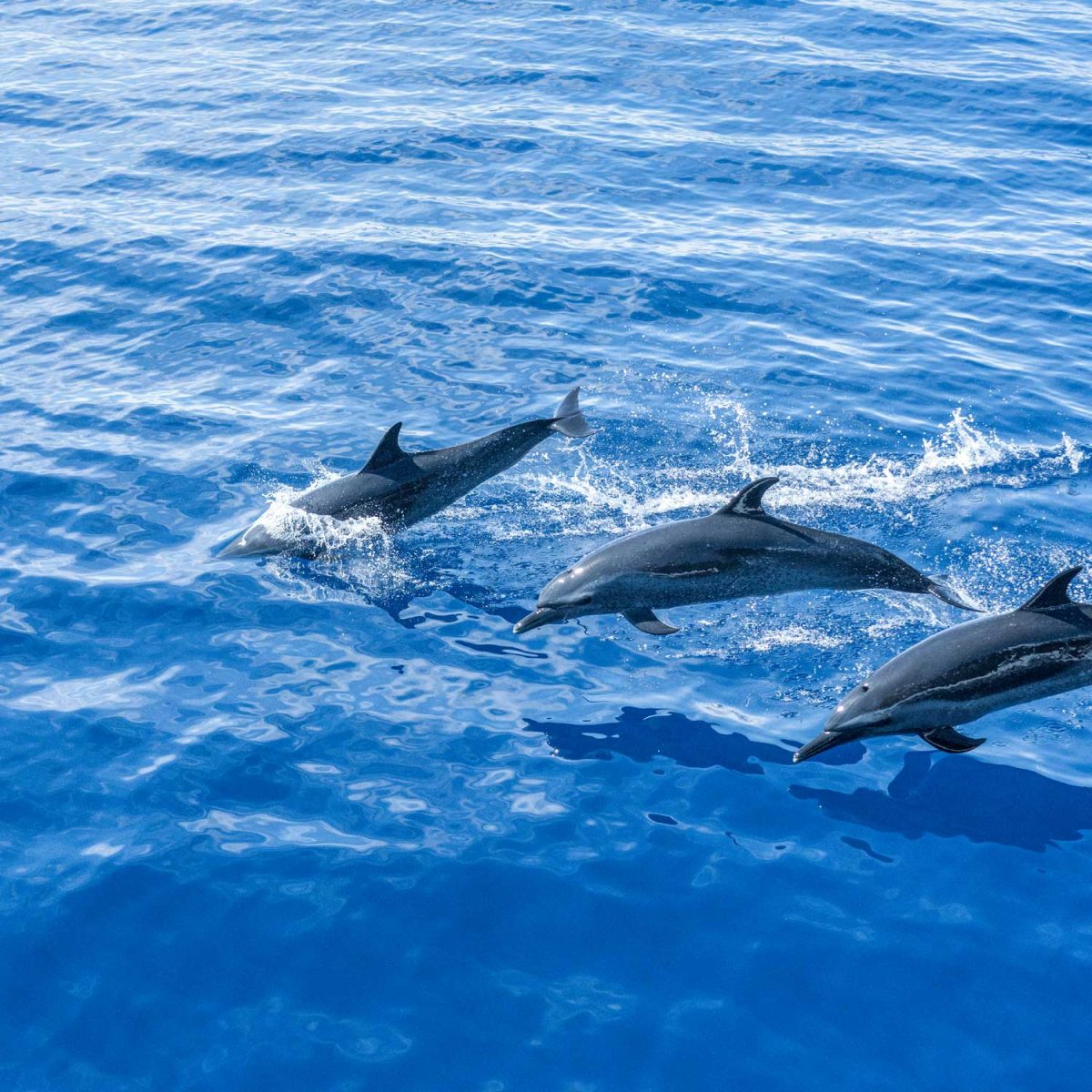
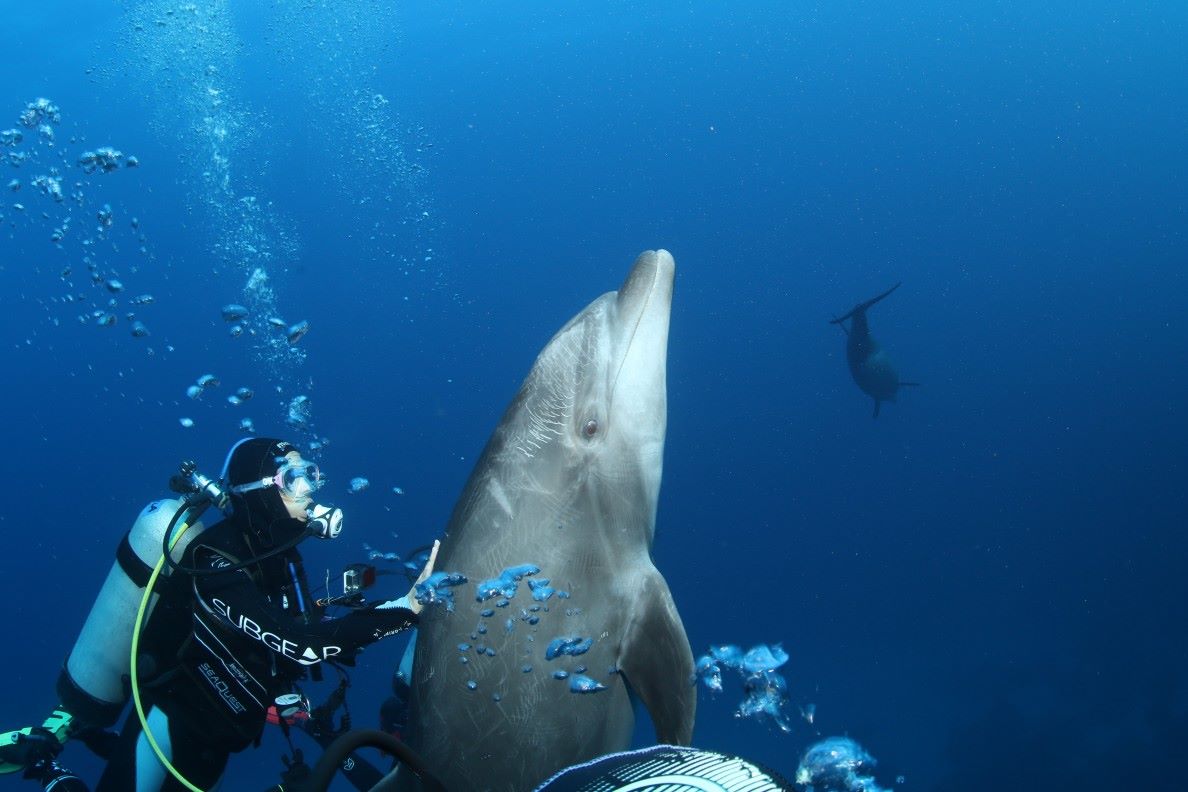
We just completed our last dive day of this 10 day expedition to the wilds of the Socorro Islands, offshore Pacific Mexico. This place never ceases to amaze even the most seasoned veterans of the area with the sheer variety of big marine animals to be seen and experienced up close. Where else in the world can scuba divers encounter a pod of dolphins who will present themselves vertically an arm length away from divers, several Giant Manta Rays competing for attention by hovering an arm length above the divers and catch a glimpse of a big Tiger Shark as it enters your field of vision and just as quickly is gone, all in one dive!? That is exactly what we experienced in the last few days on more than one occasion, not to mention the hammerheads, silky sharks, white tips, abundant schools of Jacks and Surgeon fish, and humpback whales on the surface. We wrapped up the last few days at Socorro Island itself, diving at Cabo Pearce, Punta Tosca, Roca Oneill and the Aquarium. A huge school of hammerheads and a couple Tiger shark sightings at Cabo Pearce highlighted our day there, with of course a few mantas and dolphins spending some quality time with us as well. In the afternoon I decided to go for a quick swim, so I put a mask on and jumped in to cool off, and ended up spending the next 20 minutes with 8-10 dolphins and a very curious silky shark who made several very close approaches towards me. Not bad for a quick dip! After Cabo Pearce we spent two days on the west side of the island diving at Punta Tosca for the majority of that time, which is where we encountered the unusually sociable dolphins in combination with the ever-friendly Giant Manta Rays. One dolphin in particular, who has been claimed as the girlfriend of all of our male divemasters, is the most interactive of the pod and makes a point to visit each diver, going from one to the next as she presents herself vertically, literally an arm lengths away. More and more the other dolphins of her pod seem to be imitating her and are also becoming increasingly interactive with us. Not to be outdone, 3-4 Manta Rays in the area would appear directly above the divers and hover close by, as if to say, “hey, don’t forget about us!”. Today we came back to San Benedicto to finish with three dives at the Boiler experiencing more friendly Manta Rays and dolphins. Another hugely successful dive expedition to the Socorro Islands, with humpback season just getting warmed up, lots more tales to come!

Captain Gordon

Surface Conditions: Mostly sunny with beautiful sunsets, 80-82F, winds light to moderate (10-15 kts), swell 4-9 ft with a long period.

Diving conditions: Water temp 76-78F, Visibility 40-100 ft, current mild to strong, often surgey from the swell.

Guest Blog – Nov. 30/09

Monday, November 30th, 2009

On the way out on our second dive today we are escorted by several bottlenose dolphins.  They are waiting for us as we drop in, wanting to play. One hovers vertically in the water posing for photos and almost begging to be petted and stroked. Right below the dolphins is a large black manta circling and passing through the group.  For the entire dive the dolphins hang with the group and the manta never leaves the circle of visibility.  While all the diving on the trip has been amazing; hammerheads, silvertips, galapagos and piles of whitetip sharks at Roca Partida, and other manta and dolphin encounters at Cabo Pearce; this dive at Punta Tosca was pure magic. The feeling of diving with wild animals that seek out and welcome human interaction like this is hard to describe. It rocked.
Thinking of you Miss B. Aloha!
Chuck Babbitt

Und wer dachte, dass der Tauchgang mit Mantas, Delfinen und Hammerhai gestern nicht mehr uebertroffen werden konnte, hat sich maechtig getaeuscht. Der zweite Tauchgang des heutigen Tages war wohl das beste, was ich als Taucher bisher erlebt habe: Dancing with the dolphins!!! Die Magie des Momentes, des unmittelbaren Kontaktes und der Interaktion mit wildlebenden Delfinen und Mantas ist schwer zu beschreiben! Ich glaube den Rest des Trips werde ich nicht mehr ins Wasser gehen, besser werden kann es kaum…
Christian Hierholzer

La plus belle plongee de notre vie: nager avec des dauphins et des raies mantas pendant 45 MN. que rever de plus!!! Difficile de trouver mieux dorenavant!!!!
Karine et Patrick

Guest Blog – Nov. 29/09

Sunday, November 29th, 2009

El dia de hoy en ISlA  SOCORRO  el buceo fue grandioso  con cuatro delfines y tres mantas gigantes en la parada de seguridad. 29 NOV 2009   DE LA BELLA PERLA TAPATIA GUADALAJARA.

Cabo Pierce a l’Est de Socorro, un concentre des plus belles especes reunies pour le plus grand plaisir des plongeurs : Mantas, Dauphins, Marteaux, Thons, dans les premieres dix minutes de la plongee. Apres, c’est juste la meme chose qui recommemce et les Mantas qui sont de plus en plus curieuses. c’est trop bon !
Patrick et Karine  11/29/2009

Cabo Pierce, was fuer ein Tauchgang! Der erste des Tages und gleich volles Programm: innerhalb eines Zeitabstandes von weniger als einer Minute durchkreuzten ein Hammerhai, vier Delfine und ein Riesenmanta in unmittelbarer Naehe mein Sichtfeld. Fast schon surrealistisch! Dass der Rest des Tauchganges sowie die anderen beiden Tauchgaenge des Tages trotz weiterer Mantaaction Schwierigkeiten hatten, dies zu toppen, ist verstaendlich. Trotzdem ein rundum gelungener Tauchtag!!!
Christian 11/29/2009

Finally our first giant manta of the trip

Monday, November 24th, 2008

After a quiet night at anchor we departed just before sunrise and headed to Punta Tosca, on the west side of Socorro Island, for a day of diving. Similar to Cabo Pearce, Punta Tosca features a long lava finger reaching out into the pacific offering a steep and craggy underwater ridge to explore. The weather was beautiful with a clear blue sky and calm seas as we headed out from the mother-ship towards the divesite. Immediately after dropping the first load of divers into the water I noticed nearby the familiar sight of a giant manta ray, with its ‘wing’ tips emerging from the water, resembling the dorsal fin of a large shark at times. Several more sighting from the surface told me that the divers were finally getting to enjoy the beautiful animals. We had 3 to 4 individual mantas with us for the day, a couple of which were definitely real ‘players’ and allowed for lots of personal interaction. A great day of diving!