We saw tunas over 500 hundred pounds. My dive buddy Willy and I asked the Captain if we could stay at Roca Partida for another week..

 roca partida 1

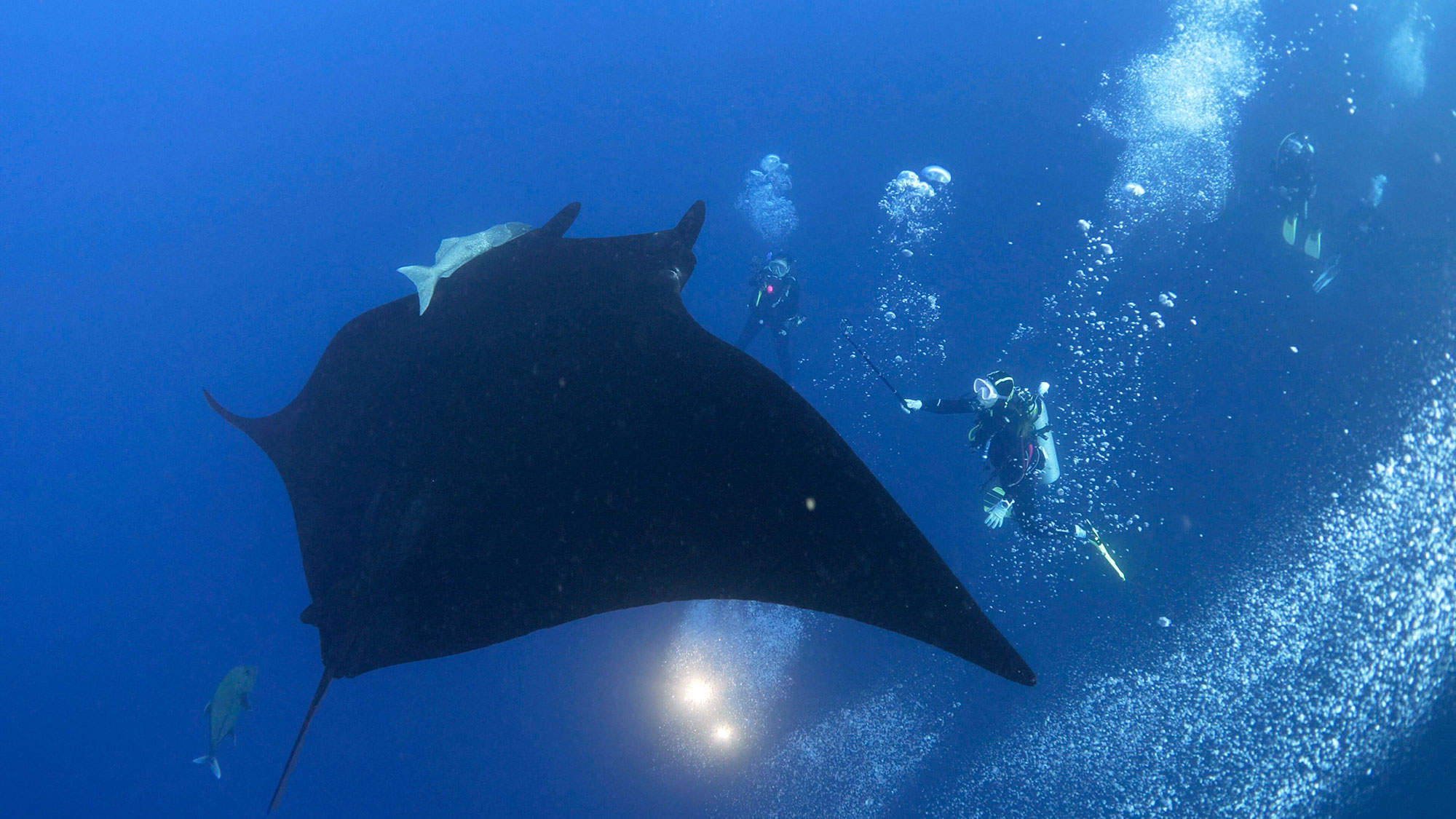
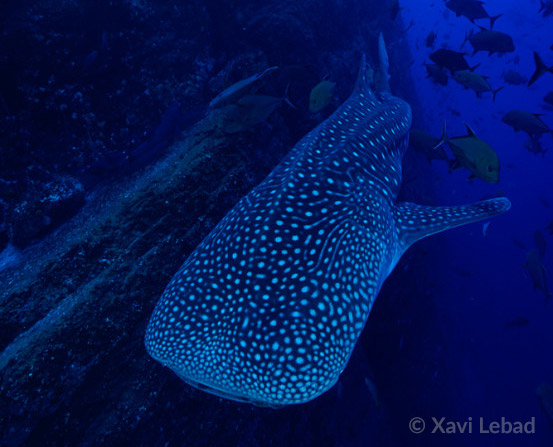
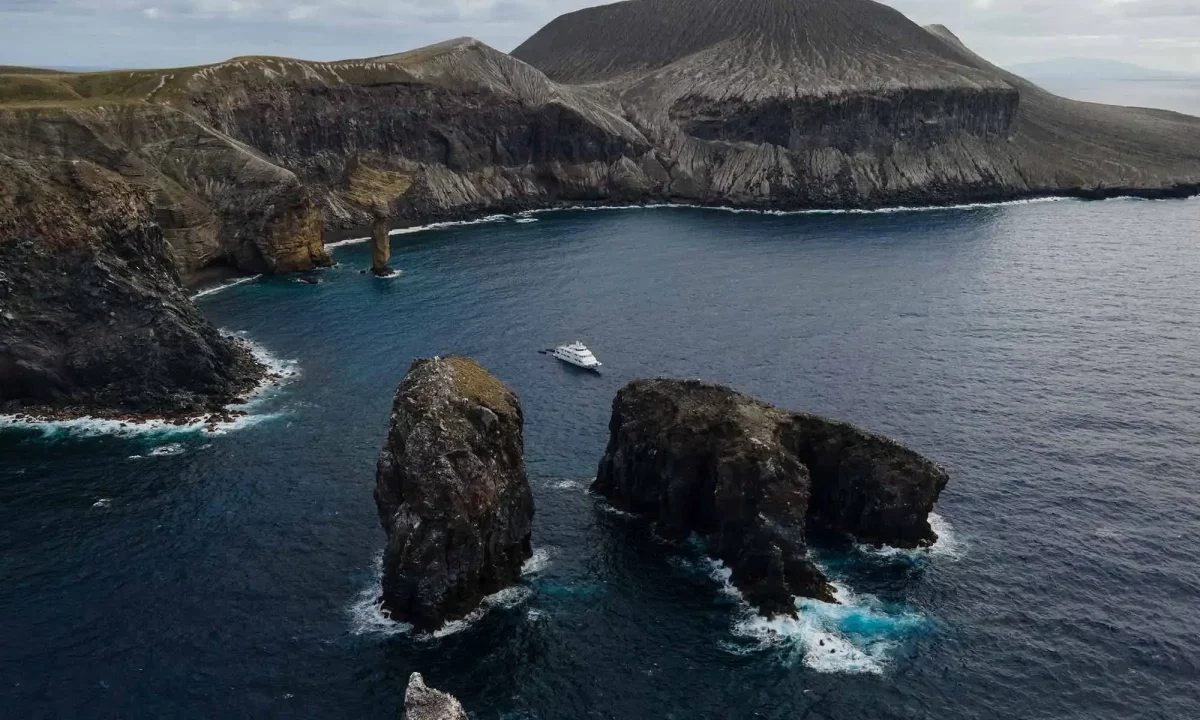
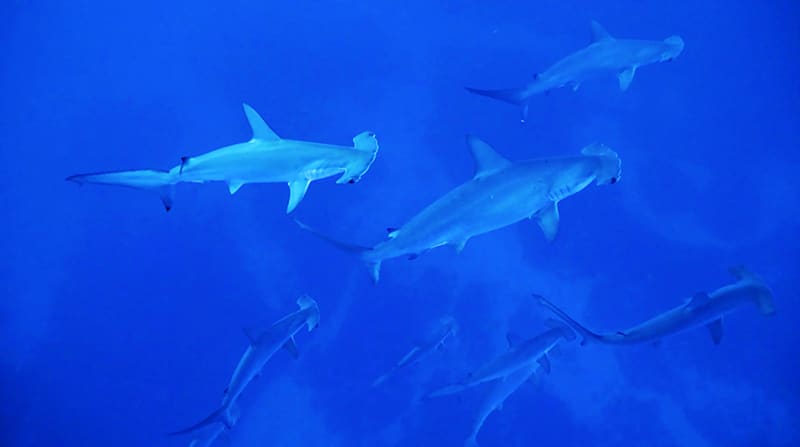
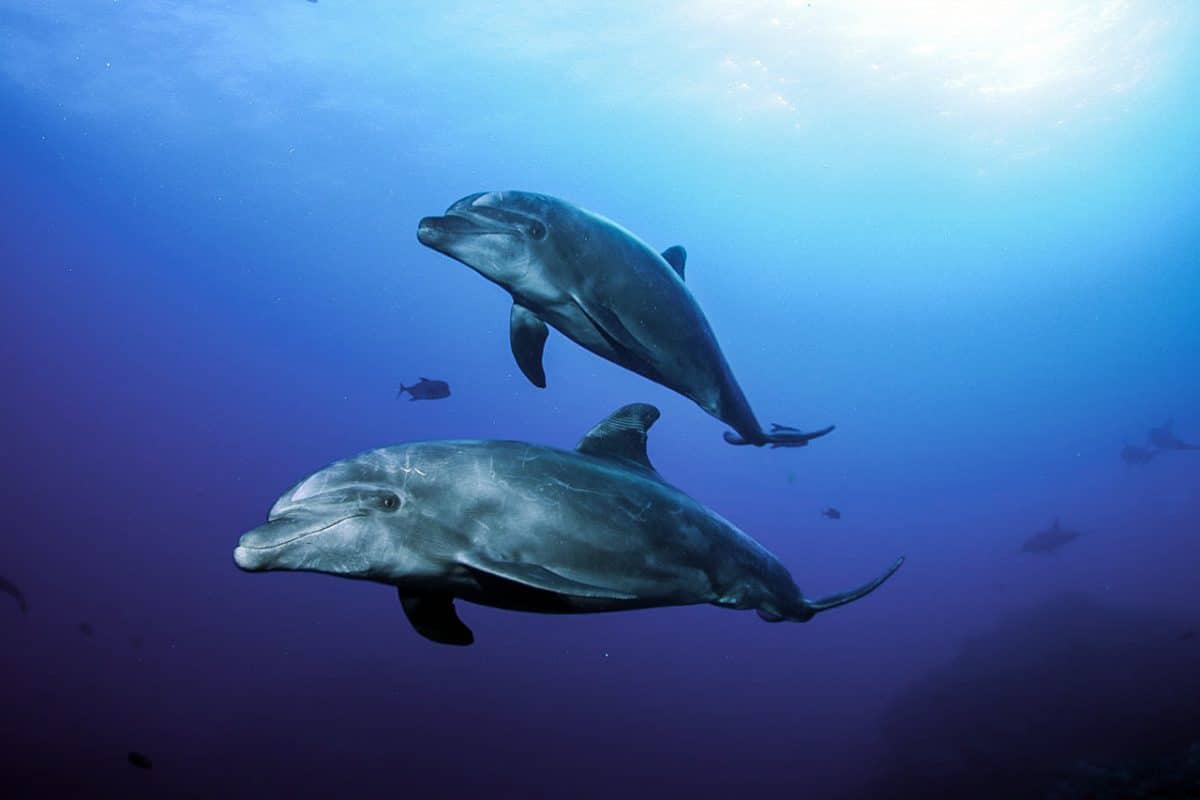
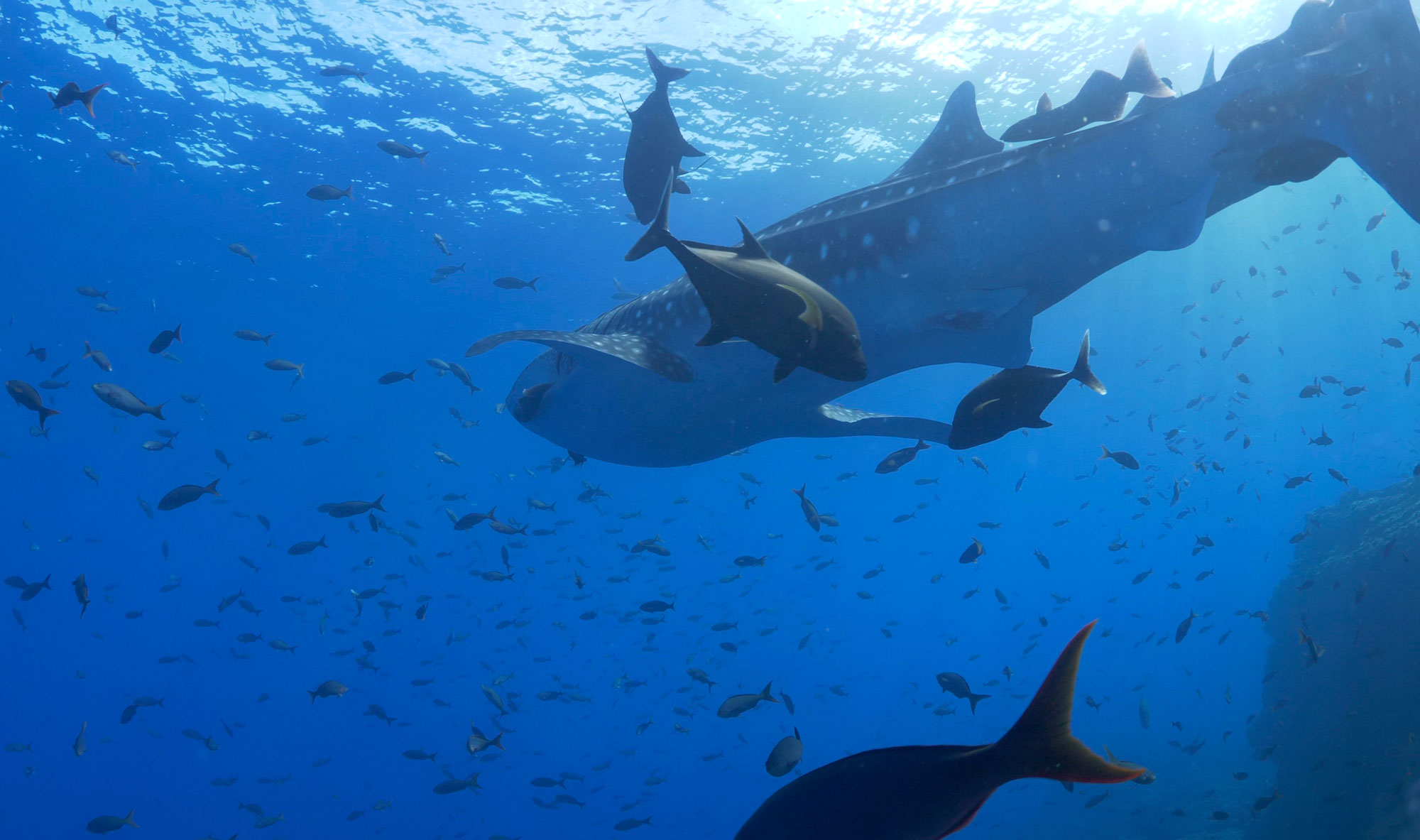
After one day at San Benedicto Island and three amazing days at Roca Partida the fish & trips group is heading to Socorro tonight. Until now our group got the chance to dive with tons of fish like tunas,  jacks, barracudas, wahoos and many other species. On blue water drifts we saw schooling fish and single predators hunting very exciting! And at the Roca itself the balconies with whitetip sharks resting on top of each other are as fascinating as silvertips and silkies cruising around north and south corner where the cleaning stations are located. Not to forget the countless cute & curious porky-pone fish. At dawn tunas and jacks started hunting and once in awhile a Galapagos shark passed by. And far out in the blue we saw the shades of big schools of scalloped hammerheads, what an amazing place!

roca partida 3

Once again we depart from roca partida, I asked the captain if we could stay there for another week, it was a joke cuz this is a twelve day trip and that would be the whole trip, but I had to try.  It was very good, I cant use words like ‘fantabuloso’ or ‘excellentisimo’ cuz then my dive buddy Willy would accuse me of exaggerating like always (Haaaa) we saw tunas on the last dive that must have been over five hundred pounds and I called them HUGE and Willy said that some tunas in the world would make that one a baby (haaaa) I have a great raport with my dive buddy Willy (anyways, now that we are exaggerating, lets send a quick message out to my girl Jo and tell her how much we miss her [mamasita, I miss yu like the desert miss the rain, I love you like a fat kid loves cake, I wait for you like the dawn waits for the sunrise, I wait for you like the night waits for the sunset, I think about you like a tuna thinks about a yummy bunch of bait fishes, I wish to wrap my arms around you like an octopus grabs it around the crab, I wish to steal you away for myself like the frigate birds stealin the food from the boobies, I have all the blue of the great blue oceans but it is not to compare with the wondorous blues of your blue eyes, when I come out from diving seventy two minutes dives four times a day with my buddy I am a bit cold wishing to have a snuggle bunny buddy snuggle time with you to warm me up because you are the radiator of my heater, and my dive buddy Willy wishes to tell you that he appreciate me and this make you to appreciate me also, and allllso, we choose the color purple on the new nautilus lifeline we purchased because it is the favourite color of my rooooostie boooooobie and I sign off with a wink and a kiss on your cheek!!! ]

-T

Comments

comments

Powered by Facebook Comments

Farewell….

This is our last fond farewell to Clipperton Island.

CLIPPERTON rock 1

Many thanks to Dr. Ernst Koschier for the beautiful/amazing/awesome pictures.

Until next time Clipperton. =)

Comments

comments

Powered by Facebook Comments

WOW! Amazing mind blowing dive at Roca Partida with hundreds of schooling silkie sharks.

A change from Clipperton: Hundreds Mind blowing, never seen anything like it hundreds of sharks from white tips, silvertips, silkies to Galapagos and one hammerhead shark? Then there were the fish, never seen so many, huge schools of criole, huge black jacks, redtail trigger fish, massive shoals of cottonmouth and some kind of mackerel.

The best dive of my life!!

- Suzi

Comments

comments

Powered by Facebook Comments

Looking back on our 2013 Socorro humpback whale season

Untitled4

Well, the end of April marks the official end of whale season 2013.  Sure there a couple of stragglers around.  We saw a mum and calf just the other day.   But for the most part, our 1200 visiting humpback whales from Alaska are all headed home now after a fantastic season at Socorro Island.  We love spending our summers in Alaska on the Nautilus Swell and figure that the humpies are no different.   What could be better than summers in Alaska – especially with all the fresh seafood there – and winters in sunny Mexico!! Humpback whales of the north Pacific spend their summers in British Columbia, Alaska and Russia and then disburse in the fall on 30 day migrations to Socorro, central America, Hawaii and Tonga. Interestingly not all humpbacks migrate south each year. Different animals will stay in Alaska year round.   What’s really cool is that the whales will return precisely to the same breeding and feeding grounds year after year perhaps indicating that  the calfs really do listen to their mum’s training..How they are able to navigate the myriad of inside passages and maze of islands is unknown.

Untitled1

The humpback whales that we see at Socorro are fasting as there is little or no available food. The animals survive by metabolizing the food energy in their blubber stores and will have lost up to 30% of their body weight by the time they return to the feeding grounds. I find it especially hard to imagine how a mum is able to deliver over 100 gallons of milk to her calf every day while she is fasting.. I find it equally hard to picture how a calf is able to nurse underwater — I wonder how that works for marine mammals??

Untitled3

One of my favourite things about whale season is listening to their songs while I’m scuba or free diving.  Only the male humpback whales sing.   They sing primarily during breeding season. And it’s quite fascinating that all the whales in the pacific ocean sing the same song. Sure the song evolves over time and there are different iterations but it’s consistent across the entire pacific.   We often hear the whales singing to us during dives.  We have even heard the songs through the hull of the Nautilus Explorer as we lie in our bunks at night.   http://www.whaletrust.org/ Scientists are not sure why whales sing but I would bet dollars to donuts that it has something to do with mating. Same thing on humpback whales jumping out of the water. Why do they do it?? Because they can??  Because it’s fun??  Because they are trying to break off parasites. The explanation I like best comes from our friend and noted humpback whale researcher JJ Jacobsen. JJ notes “it seems to me that breaching adult humpback whales are typically males who have unsuccessfully competed for the attention of a female”. In other words, they just lost the girl to the other guy.

 I’ll sign off on that note.  Safe diving.


- Captain Mike

Comments

comments

Powered by Facebook Comments

The mad king of Clipperton Island..

_DSC0841AC (3)

http://www.damninteresting.com/the-tyrant-clipperton-island/ - click on link to see  website. 

THE TYRANT OF CLIPPERTON ISLAND

ARTICLE #340 • WRITTEN BY MARISA BROOK

Clipperton Island, with the freshwater lagoon visible in the center.

For a tropical island, Clipperton doesn’t have very much going for it. The tiny, ring-shaped atoll lying 1,000 kilometres off the southwest coast of Mexico is covered in hard, pointy coral and a prodigious number of nasty little crabs. The wet season from May to October brings incessant and torrential rain, and for the rest of the year the island reeks of ammonia. The Pacific Ocean batters the island from all sides, picking away at the scab of land that rises abruptly from the seabed. A few coconut palms are virtually the only thing that the island boasts in the way of vegetation. Oh, and the sea all around is full of sharks. It isn’t much of a surprise that Clipperton Island is decidedly uninhabited. This was not always the case, however. Over the course of the island’s modern history, four different nations–France, the United States, Britain, and Mexico–fought bitterly for ownership of Clipperton. It was desirable both for its strategic position and for its surface layer of guano, since the droppings of seabirds (as well as bats and seals) are prized as a fertiliser due to their high levels of nitrogen and phosphorus. Each of the four countries in turn attempted to maintain a permanent presence on Clipperton between 1858 and 1917. When a contingent of Mexican settlers did finally gain a toehold on the atoll, they were forgotten and left stranded on the island with a delusional man who seized the chance to become a dictator.

The island’s English name comes from a tenuous association with a British pirate, but the first modern explorers to claim Clipperton were the French, in 1858. Their intention was to land on the island’s shores and read out a proclamation, but this proved to be difficult; approaching the island with the ship posed a significant risk of running aground on the coral reef, and smaller rowboats were thwarted by sharks and fickle tides. Desperate, the French resorted to sailing around the perimeter of the island while reading the proclamation out to its coastline. Then, satisfied, they departed. Although they were aware of the guano, they felt it was likely to be of inferior quality, so they left it at that.The next country to claim the island was the United States, in 1892. Unlike the French, the Americans suspected that Clipperton’s guano was extremely valuable, and they annexed the island under the auspices of the U.S. Guano Islands Act. A small crew of American miners spent the next few years on the island attempting to turn a profit, but poor market conditions and expensive resupply-trips intervened. Then, in 1897, the Mexicans decided they’d had enough of the United States occupying an island so close to the Mexico coast. A small group of Mexicans sailed over, lured two of the three Americans away, and left a Mexican flag in place of the American one that had been flying from a forty-foot pole. The U.S. backed off and gave up its claim to the island, but France and Mexico were unable to come to an agreement. To complicate matters, an English company then decided to try a guano-mining operation of their own, insisting that they did not care who owned the island. Mexico allowed them to proceed. Governor Ramón Arnaud Sr

The British had high hopes, and got straight to work building a new settlement on Clipperton. They put up houses, constructed an enclosed soil garden, and planted more palms. But the island was pretty much as inhospitable as ever, and the mining, which began in 1899, did not prove to be lucrative. Although the Clipperton guano was of fairly good quality, there was now too much competition in the market for it to be worthwhile. By 1910 the British decided that the effort was futile, and removed all of their employees except for one island caretaker. The island’s other claimants, France and Mexico, signed an arbitration treaty leaving the question of Clipperton’s ownership to King Victor Emmanuel III of Italy. He began his deliberation. In the meantime, Mexico sent over a group of 13 men from their army to guard the island, including a de facto governor by the name of Ramón Arnaud. Wives and servants followed, and a number of children were born on the island in the early 1910s. An American ship was wrecked on the island in 1914; rescue came quickly, and the Americans advised the Mexicans to leave. Arnaud declined; all he did was expel the last remaining Brit from the island, sending the man and his family away with the Americans. With their last employee expelled, Britain stopped paying attention to Clipperton; meanwhile, Mexico was taking increasingly little notice of it themselves owing to a developing revolution in the country. Without any explanation, ships stopped arriving at Clipperton. The tiny community was dependent on the mainland for food and information, and soon their cache of supplies began to dwindle. In this case, no news was bad news.

At this point there were approximately 26 people on Clipperton Island: 13 soldiers, about 12 women and children, and a reclusive lighthouse-keeper named Victoriano Álvarez who lived alone at the base of a sheer cliff below the lighthouse that the Mexicans had constructed in 1906. The island’s vegetable garden had been lost to the elements, and the only types of food available from the island itself were birds, bird eggs, and fish. There were also a few coconuts every week, but these were not a sufficient source of Vitamin C, and the islanders–especially the adult men–began getting sick with scurvy. One by one, they started dying; their fellow islanders buried their bodies deep beneath the sand in order to make them inaccessible to the crabs. Arnaud was mildly alarmed, but he was reluctant to abandon the island. At any rate, he knew that any attempt to reach the mainland would probably end badly; the one boat that the islanders owned did not have enough fuel for a trip over to Acapulco, and rowing it would be extremely difficult with only five men remaining on Clipperton, all of them suffering the effects of undernourishment and vitamin-deficiency.

The situation took another turn for the worse when Arnaud spied a distant ship, and talked the three other soldiers into joining him in the rowboat and going to the ship for help. Out on the water there was no sign of any such ship; it is quite possible that Arnaud had been deceived by an illusion. Angry, the three other soldiers attempted to overpower Arnaud and seize his weapon. Several of the wives watched helplessly from shore. The struggling mass of men fell overboard, and all of them drowned in the waves. Only hours later, two unrelated emergencies arose almost at once: a hurricane appeared offshore, and Arnaud’s heavily pregnant widow went into labour with the couple’s fourth child. The women and children took refuge in the cramped basement of the Arnauds’ house, and Alicia Rovira Arnaud gave birth to a son, Angel. Mother and baby survived, but the islanders emerged from the basement to find their buildings torn to pieces.

The Clipperton Island lighthouse

Just then, Álvarez the hitherto-unassuming lighthouse-keeper abruptly arrived at the destroyed settlement, collected the weapons, and threw them into the deep waters of the lagoon. Saving one rifle for himself, he announced to the women and children that he was now the king of the island. With that, he began a campaign of enslaving the women for whatever purposes he desired. One mother-daughter pair who refused to obey him were raped and shot to death. The rest were given regular beatings at the minimum.


Months passed, with Álvarez borrowing whichever female islander he wanted whenever he wanted: when he’d had enough of 20-year-old Altagracia Quiroz, he moved on to 13-year-old Rosalia Nava, and then 20-year-old Tirza Randon. The strong-willed Randon was far and away the most outspoken about her hatred of Álvarez, but was unable to think of a way to escape. “King” Álvarez was aware of the chance of being discovered by passing ships, especially since he knew that Alicia Rovira Arnaud would immediately tell all to any outsider who appeared. Consequently, Álvarez singled out Arnaud for threats, telling her that he would kill her the moment anyone from the outside world came into view.

Álvarez was almost certainly mentally ill. He had been belittled for much of his life on account of his African heritage, which was as stigmatised in Mexico as it was in the United States at the time. Years of isolation on Clipperton could only have amplified his anguish; lighthouse-keeping was notorious for causing madness.

Somehow, life at the colony went on for nearly two years under Álvarez’s reign of terror. The women and children divided up the coconuts and the leftover scraps of materials following the storm. Álvarez went on cycling through his trio of women. In the middle of July 1917, he got tired of Tirza Randon again, and decided that his next target was Alicia Rovira Arnaud, whom he had not pursued earlier. He picked up his rifle, took Randon back to the main settlement, and informed Arnaud that she was to present herself at his hut by the lighthouse the following morning. Sensing an opportunity, Randon informed Arnaud, “Now is the time.”

On 18 July 1917, Arnaud and her seven-year-old son, Ramón Arnaud Jr., set out for the lighthouse-keeper’s hut, accompanied by Randon. Álvarez, sitting outside roasting a bird, was in uncharacteristically good spirits; however, he was not happy to see Tirza Randon back so soon. “What are you doing?” he asked her, and attempted to shoo her off. Instead, she ran into Álvarez’s hut, returned with a hammer, and upon a signal from Arnaud, took the hammer in both hands, swung, and struck Álvarez in the skull. And then a second time. Arnaud sent her son inside the hut, and meanwhile Álvarez shook off Randon, grabbed an axe, and went after Arnaud. Arnaud yelled to her son to get Álvarez’s rifle. He did, but in the meantime Randon had landed another good swing on Álvarez, and he fell to the ground. She had most likely killed him by this point, but she allowed her rage to lead her to a knife, return, and stab the body repeatedly. In hysterics, Randon then began slashing at the dead man’s face. The dictator of Clipperton Island had met his end.

The USS Yorktown

Even as the three still stood alongside the expired tyrant, little Ramón spotted something on the horizon that the community had not seen in nearly two years: a ship. The USS Yorktown was an American gunboat patrolling the west coast of North and South America, looking for German U-boats in accordance with a rumour that the Germans had established secret radio and submarine bases in the Pacific. Clipperton Island fell right along the Yorktown’s route, and certainly qualified as a potential hiding-place for the enemy. The Yorktown circled Clipperton and made an attempt to send a smaller boat ashore, but the Americans were unable to reach the island and the boat returned to the ship. The islanders were devastated to see this retreat; just when they had caught sight of an opportunity to escape, it had disappeared. The women even briefly discussed whether they should just give up and either shoot each other or drown themselves in the lagoon. Fortunately, though, the Americans made a second attempt at sending their boat to Clipperton’s shores, and this time they were successful.


Arnaud met the Americans and frantically indicated the islanders’ desire to leave as soon as possible. Several members of the crew accompanied the women to the settlement in order to collect a few possessions, and others investigated the lighthouse. The Americans noted that the children were all small for their ages due to malnutrition; in particular, two-year-old Angel Arnaud was suffering from rickets and could not walk. Eleven-year-old Francisco Irra carried Angel on his back all the way to the American boat, and the sailors took the Clipperton Island survivors–three women and eight children–to the Yorktown. Álvarez’s body was left for the crabs.

Yorktown captain Commander Harlan Page Perrill later wrote in a letter to his wife:

I noted the women and some children gathering along the beach and you can imagine my surprise when the watchers on the bridge reported that they were getting into the boat. Speculation was rife. When Kerr got alongside and made his [oral] report, he revealed a tale of woe absolutely harrowing in its details.


Navigator Lieutenant Kerr’s official written report of the Clipperton Island rescue divulged no details whatsoever about the anti-social lighthouse-keeper; Kerr and Perrill were both eager to protect Randon and the other survivors from the potential legal and social repercussions of the final altercation between the women and Álvarez. For seventeen years, neither man would say a word about what had really happened on Clipperton Island between 1914 and 1917.

The Yorktown briefly suspended its German-hunting and set a course for Salina Cruz, Mexico, where a number of the women and children had family members. They sent ahead a wireless message to the British consulate in the city asking for help in locating relatives. The islanders all experienced some seasickness but liked the environment of the ship, and the sailors grew fond of the children. On 22 July 1917, the Yorktown reached the mainland.

Clipperton survivors aboard the Yorktown

Right after the ship anchored, a boat appeared carrying Felix Rovira, the father of Alicia Rovira Arnaud. He had been regularly questioning Mexican authorities as to the fate of his daughter, only to have been told repeatedly – and erroneously – that all of the Clipperton Island colonists had died. Rovira and his daughter and four grandchildren had a reunion so moving that a number of the sailors burst into tears. A small fund that the crewmen had established to help the survivors start new lives on the mainland was turned over to them. The local citizens were deeply grateful to the Americans for the rescue, and threw a party at a local hotel for the sailors and the survivors. Initially, Perrill had supposed Alicia Rovira Arnaud to be around forty years old. In reality, she was only twenty-nine, and the other women were several years younger. Nine years on Clipperton Island through an incredible gauntlet of hardships had taken their toll; however, eleven of the settlers had made it through. Their story was passed from person to person in subsequent years, and came to be known all over the west coast of Mexico.

Victor Emmanuel III of Italy finally made up his mind in 1931, awarding Clipperton Island to France. There have been occasional presences on the island since as the result of French/American military activities, scientific expeditions, and the occasional brief set of castaways. Ramón Arnaud Jr. even revisited the island with a team of biologists led by Jacques Cousteau in 1980; seventy-year-old Arnaud was pleased to see his place of birth in spite of the trauma. But no one has tried to live permanently on Clipperton since the last settlers were rescued by the Yorktown. Even without a crazed lighthouse-keeping rapist-tyrant, the island is very poorly equipped for comfortable human habitation.

Written by Marisa Brook.

Comments

comments

Powered by Facebook Comments

Tonight was one of my most moving experiences ever – at sea on the Nautilus Explorer.

 sunset

Tonight had to be one of the most interesting and moving things I have ever seen.   The trip leader who normally leads this group of divers  recently passed away.  Our guests wanted to do something special for him during this trip.  So they brought little wax paper boxes with candles that float, along with orange and red paper flowers.  They lit the candles, put them in the water and let them drift away, probably a hundred drifted off into the starlit sky, we had all the back deck lights off.  I thought that was neat until they brought out the paper hot air balloons. It has a fuel cube like you use for starting a BBQ.  They lit each bricket and the hot air ultimately send it off into the sky.  They had 1/2 dozen of these things and they burn and fly for about 5 minutes.

I did wonder if the navy base would see them and get excited but no problem.


- Captain Al

Comments

comments

Powered by Facebook Comments

diving Socorro Island without blowing any bubbles…

rebreather diver

We were privileged to host a full charter of rebreather divers this winter.  It was a pleasure. The animal behaviour around the closed circuit rebreathers was quite different than usual. Divers saw giant mantas and dolphins of course.  Whale sharks. And lots of sharks some of whom came in very close. One guest commented that he felt the need to blow the occasional bubble to keep the sharkies at a safe distance on a couple of occasions. My personal theory is that sharks sense and are intrigued by  the electrical current in the circuitry of rebreathers.  They know something is going on and come in close to assess further.   We know that sharks are generally wary of bubbles and keep their distance  (I have had some very CLOSE encounters with galapagos sharks while free diving at Socorro and I’ve always felt it was because free divers are ….   stealthy)..    Very interesting to see different behaviour around rebreather divers.   We hope you enjoy the following outstanding video by our friend Johnny Friday.

http://vimeo.com/56798596

Safe diving.

-Captain Mike

Comments

comments

Powered by Facebook Comments

Captain’s Log – Clipperton Atoll – A genuine desert island in the middle of the Pacific Ocean

clipperton island

Today is our fourth day on location at Clipperton Atoll aka Isle of Passion. Its more romantic sounding name coming from the time when a Mexican navy sector was stationed on the island during the early 1900′s and then forgotten about when the Mexican revolution started. The navy personnel and their families, who had previously depended on navy resupply ships for their stores, were left to fend for themselves. This invariably led to disease and madness. As the story goes, the last surviving man on the island declared himself the King of Clipperton (a title that has been claimed many times since on the Explorers 5 visits here), and began to rape and murder the remaining women. The women eventually revolted and murdered the self proclaimed King before being rescued finally by an American navy vessel.

clipperton island 5

Today was our turn to land on the wave swept beaches of the historied island. With the barrier reef circling the island and the ever present swell breaking over this reef, getting ashore here is risky at best. It involves patience, timing and no small measure of cojones on everyones part, crew and guests alike. First we had to find the cut in the reef that would allow our inflatable through into the shallows on the inside of the reef. The second step is to standby outside the break line of the reef, with inflatable loaded and ready to go, watching the swell closely and waiting for those periods of relative calm between the big wave sets. When the big waves had passed through we would have a period of about 45 seconds to ride the back of a small swell in through the cut before the big waves would begin crashing behind us.

clipperton rock ruinsclipperton rock lagoonclipperton island 8

Once through the cut the crew could jump out of the inflatable and walk it into the beach where our guests could hop ashore. We got all our guests ashore without incident and spent most of the remainder of the day on the island.

wreak 2wreak


Getting off the island and back to the Explorer presented the same challenges as landing, and despite the challenges and discomfort of heavy rain, low tides and increasing swell we managed to get our guests back onboard safely with only a couple close calls! Home sweet home.

Everyone is now dry, warm and getting ready for dinner. After dinner we’ll try out a night dive on the leeward side of the island.

Weather today was overcast with periods of heavy rain, clearing early evening for about an hour of sunshine.

clipperton island 9

- Captain Gordon Kipp

Comments

comments

Powered by Facebook Comments

Nautilus Explorer: Proud to be part of soon to be released 3D IMAX film – GREAT WHITE SHARK.

great white shark

Coming soon to a theatre near you – an amazing 3D IMAX film on Great White Sharks.

We are proud to have been part of this film production…


Enjoy.

- Captain Mike.

Comments

comments

Powered by Facebook Comments

Noon report from Captain Gordon, on site at Clipperton Atoll on the Nautilus Explorer

shark

Wind is up a bit today so we’re diving along the leeward reef. What we call “The Nursery”.

Two dives so far and it’s been good. Lots of juvenile sharks, silver tips and galapagos.

Very fishy also. One guest just came up from his dive and said it’s one of the best dives he’s ever done. Huge school of groupers, hundreds he said, all around them. So, good stuff today.

Wind is out of the NE around 10-15, swell from the south still rolling.
Same 4 fishing boats are still around, just south of the island 5 or 6 miles fishing.

Everything going fine so far.

Thanks,
Captain Gordon

Comments

comments

Powered by Facebook Comments