Posts Tagged ‘Roca Partida’

Enroute from Socorro to Clipperton Island with a fascinating group of adventurers and scientists onboard + “what is a rebreather” – guest log – APR 13, 2010

Wednesday, April 14th, 2010

We spent one day and one night crossing open ocean.  Some people worry that sleeping in a small bunk on a rolling ship with the engines churning all night might be hard.  For me though, its like being rocked in a cradle, and the engines  basically seems like no noise to your brain.  I really do sleep like a baby on boats.

We woke with the Revillagigedo Island of San Benedicto in sight.  A beautiful, dry, volcanic island that rises straight up from deep water.  The Revillagigedos (pronounced ray-vee-yah-hee-hay-dos) are part of a very tectonically active part of the world, where three oceanic plates are colliding into one another, creating deep sea vents, and pushing up islands from very deep water.  The Galapagos Island are made in much the same way.  San Benedicto is so active, it actually erupted (blew up) in 1952 – not very long ago!!

The Revillagigedos are really three main islands (uninhabited except for a Mexican Naval base on Socorro Island): San Benedicto, Clarion and Socorro, and a tiny Islet called Roca Partida (where we hope to dive on our way back from Clipperton).  The closest island is about 1,700 miles round trip from San Diego!  Since they are remote, unfortunately, they are also a favorite destination for illegal fishing, including shark fining – a terrible practice where sharks are caught and their fins are cut off for sale as shark fin soup.  The sharks, often still alive, are tossed overboard to die slowly after their fins are cut off.  This is one of the most destructive fishing practices in the world, and is driving down shark populations all over the globe.  This is very important because sharks are top predators‚ meaning very few things eat them. When top predators go, it throws the ecosystem off balance.

San Benedicto, where we did our first dive, is about 220 miles south of Cabo San Lucas.  We did our dives at a place called the boiler.  It is big rock that goes from about 12 feet deep to about 150 feet.  Because it comes up so steeply, it creates currents that concentrate things like krill and small plankton.  This attracts giants like the big Manta rays that feed on krill.  It also attracts lots of fish, birds, and even sharks.  It is a biosphere reserve, off limits to fishing and protected from extractive activities.  To do work there, and to take any specimens, we need special permits, and we also have to have a Mexican partner, and a Mexican scientist with us on board (we have Mauricio Hoyos with us, he’s the one studying sharks).

No tags.  No Galapagos.  5 white tip sharks (3-4 feet), one scalloped hammerhead shark 4 feet (80 feet – too deep to go chasing after it) small.  Saw one broken receiver from a different project.  Buoy was broken.  Couldn’t fix it.

Jeff is the equivalent of an underwater Indiana Jones.  Seriously.  He straps an unbelievable amount of equipment to his body (most of it is safety equipment for life support, and some is sampling equipment so he can collect specimens – then there’s the camera to document stuff).  Jeff has been a pioneering cave diver, exploring and discovering underwater cave systems, and finding new species of organisms never before known to science.  Some of his caves were so remote in the jungle (he discovered several in Central America) that he had to hire ponies to carry him and his gear through the jungle to these small ponds which turned out to be entrances to extensive underground water filled caves.  Some even had archeological artifacts from Mayan communities living near-by hundreds and even thousands of years ago. These days Jeff often uses what are called closed circuit re-breathers – a type of underwater life support system that allows him to go much deeper than a regular scuba tank.  In this way he can explore places deeper than most people can dive. The twilight zone.

What we saw/learned today:
The surge (caused by big swells) was pretty strong, and every time we stopped to look at fish, a surge would come and literally pull you off the wall.  Holding on is super hard, like you might imagine hanging from a cliff from your finger tips.  We were easily pulled off and tumbled around a bit.  It made careful close photography difficult.  But there are some professional photographers who still got amazing pictures.  Next time you see those beautiful pictures on animal planet or in a animal magazine-realize how hard it is to get those pictures!

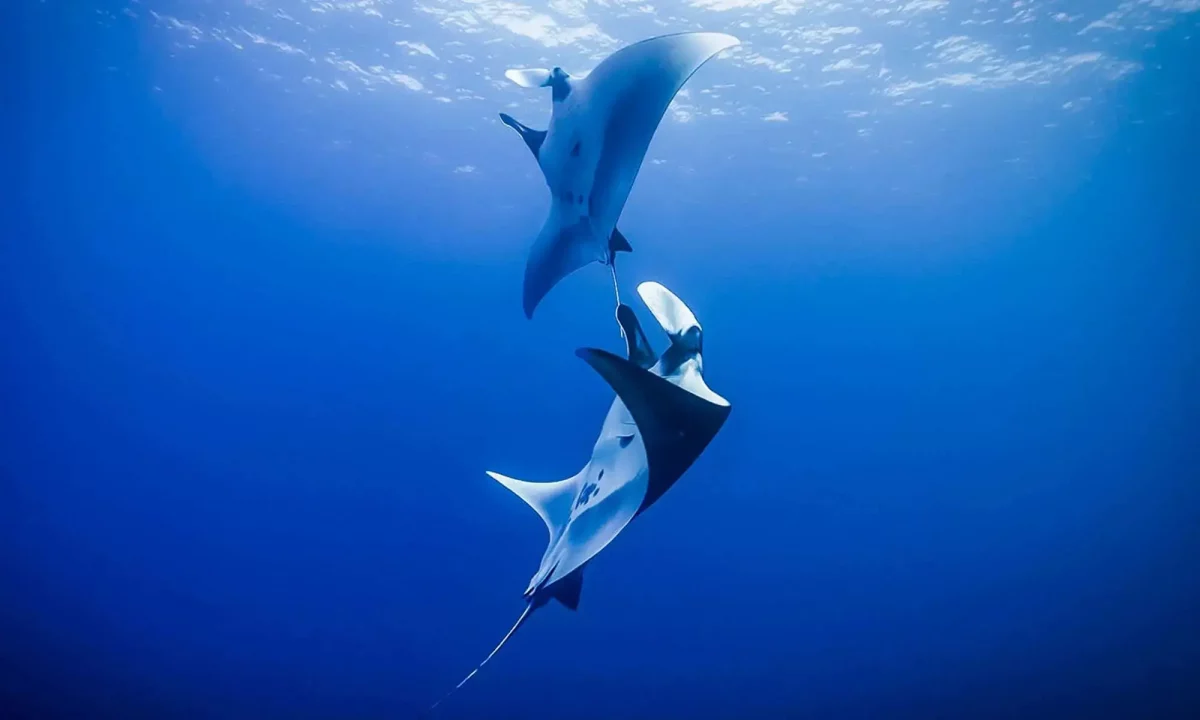
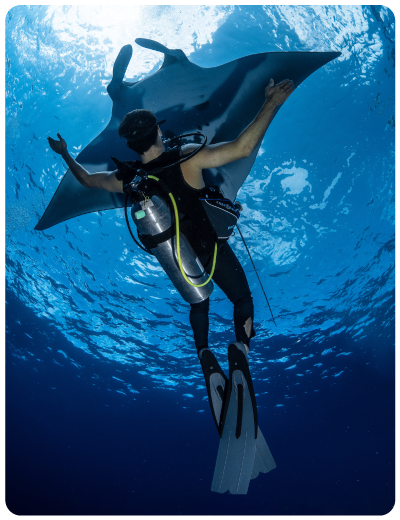
We saw one really big Manta Ray, but it was too deep for us to get close to.  These are such magnificent animals, and actually have very large brains.  They feed on small animals like krill, but seem to have quite complex behavior patterns, including interacting with divers.  Some will approach divers, and seem to like to have their bellies gently rubbed – can you imagine rubbing the belly of a huge manta ray whose size literally blocks out the sunlight from above, like having a small car parked above you?

We saw lots of clarion angelfish, a beautiful orange angelfish.  It is closely related to the Clipperton Angelfish, and one of the fish we came here to study.  We hope to get fin clips for some DNA studies on our way back, we’ll see.  I saw a large moray eel. They usually stay sort of hidden, inside cracks.  This one was swimming around though.  It stopped on a ledge.  As soon as it stopped swimming, a much smaller clarion angelfish approached the head of the moray (which had loads of very sharp sticking out of it), turned to put its tail fin right in the Moray’s face, and proceeded to twitch and shake.  It definitely seemed like a signal, or communication of some sort. So cool!  I got some video of it.  Then, after a few spastic body twitches by the clarion angelfish, a flag Cabrilla (type of grouper) arrived.  Much bigger than the clarion angelfish, but not as big as the grouper.  It physically and sort of rudely pushed the clarion off the ledge, and proceeded to sit right in front of the face of the Moray. Through all this, the moray seemed to just sit there and let the two other fish work it out.  It was very much as if the clarion and flag cabrilla were competing to be near the moray.  Odd behavior and I don’t know why they may have done that.  I’ll have to look into it when I get back and ask my friends who know about fish behavior.

We did two amazing dives at San Benedicto.  The water was full of krill, small jellyfish and ctenophores – all signs that the water here is productive – lots of nutrients to support a rich food web, and lots of organisms.

After the dives we pulled anchor and steamed to Socorro Island where there is a naval base.  We need to pass customs at the naval base since we will then be leaving Mexican waters, on our way to Clipperton, which is owned by France.  That is a whole story itself.

After customs we set out across the ocean blue for the tiny Atoll of Clipperton.   Blue, blue, blue.  No one else out here.  Wind is blowing a steady 10-15 knots from the northeast, fresh whitecaps, 5-8 foot swells.  Some spotted dolphins, lots of flying fish, a few booby birds.  The birds too will soon be gone until we get closer to Clipperton.  We head 170 degrees, almost due south.

Here are: notes from Jeff Bozanic  all about his technical diving, and a section on what rebreathers are and how to use them – this is the stuff of exploring at the edge!

I set the alarm for 6:00 am, so that I could get some work done before we arrived on station at San Benedicto Island. I needed to label some specimen bags for the dives today. I also wanted to get caught up on writing some notes, and add clips to hammers and fish baskets for later use under water.

Nicole and I spent some time talking to Sten (the lead divemaster) and Mauricio, the Mexican researcher aboard. We were concerned about collecting in Mexican waters. Both Nicole and I have permits for Clipperton, but Clipperton belongs to France. Our French permits do not allow us to collect in the Revillagigedo Islands, which belong to Mexico. Mauricio has permits, but his permits only allow for the tagging and tracking of sharks. We discussed how we might be able to piggy-back our work on his permit, but in the end decided that we would just have to forego collecting on this part of the trip, and try to obtain permission for the return journey.

In a way, it is pretty frustrating. All we wanted to do for Nicole’s research was to collect 20-50 angelfish, cut a small part of fin off each with a pair of scissors, and return them live to the water. Their fins would heal, and Nicole and her team would have the tissues they need to provide valuable information back to the Mexican government.

Unfortunately, many people do not respect local laws and regulations. Commercial fishermen come in and using nets kill thousands of angelfish and other reef fish annually. They do not even want these fish, but kill them while trying to catch the fish they really want to sell. The commercial aquarium trade collectors sneak in and collect hundreds of live angelfish, selling them to private collectors who do not care about regulations for sometimes several thousand dollars each.

We would have planned this better, however we did not know that Mauricio would be on the trip. Mexican regulations for conducting science in their waters demands that a Mexican national who is also a scientist accompany the cruise, and directly oversee all such work. Unfortunately, Mauricio was confirmed as a participant on this voyage at the last minute, and that did not allow us time to interface and set things up.

The reality is, we probably could have collected the fish, sampled them, and released them unharmed, with nobody the wiser. However, in a moral sense that would have made us just as guilty as the poachers who come in and ravage the waters by stealing fish without permission. From our perspective, it is better to wait, and conduct our studies according to the letter of the law, abiding as well to the intent of the regulations.

So instead of collecting on these first two dives, I used the time to look for basket stars for future reference, check out my diving equipment, and practice with my camera. I did two dives, at a location called The Boiler.  Normally there are many manta rays here, but today I did not see any. I did see a few small (three foot long) white tip sharks, but not much else. On the bottom at about 135 feet deep, I found a transceiver and buoy that were being used to collect shark migration data, but the buoy had sunk to the bottom, making the transceiver inoperable. I took a few photographs of it to give to Mauricio to send to his colleague, Dr. Benson.

I had a problem with one of the oxygen sensors on my rebreather. It was reading too high, and would need replacement. It is one of the things I will attend to in the next day or two.

After the dives, we steamed from San Benedicto Island to Socorro Island. The Mexcian government maintains a naval base there. We had to check in with the authorities there, and immediately check out again, as we would be leaving Mexican waters for the French territory of Clipperton Island. Formalities took about an hour, and then we were on our way.

Empty ocean. No coastline. No islands. Probably no other vessels. Ample time to further prepare, get caught up on log notes, sleep, read, watch movies, and generally relax. I have chores to do: Clean my rebreather, fix my rebreather sensors, fill cylinders with trimix (more on that later), label collection bags, prepare my field notebook, and finish a report which will be due when I arrive back from the expedition.

But, no work for me tonight! Instead, I watched the movie Sherlock Holmes with the other expedition members.

What is a rebreather?
By Jeffrey Bozanic

Normal scuba is an open circuit system. Combining a high pressure cylinder and a demand regulator, you inhale gas at ambient pressure (the pressure around you), use a little of the oxygen in the gas, and exhale. When you exhale the gas, it bubbles to the surface, carrying as much as 98% of the original oxygen it contained. The open circuit comes from the fact that the exhaled gas is released on every breath. This is the type of equipment you usually see on television, being used by Jacques Cousteau and others.

A rebreather recirculates the gas a diver is breathing, allowing the diver to breath the same gas over and over again. Thus, there are normally no or very few bubbles. The system removes the carbon dioxide generated by human metabolism, and adds oxygen and other gases to make up what is consumed. Because the gas is breathed over and over again, instead of being thrown away with every breath, a diver can remain underwater far longer on much less gas. In fact, for some dives, rebreathers can be as much as fifty times more efficient on gas consumption than standard scuba.

There are three major types of rebreathers. Each has different advantages and disadvantages, and each requires a different type and degree of training. The three classes of rebreathers are: (1) oxygen, (2) semi-closed circuit, and (3) mixed gas closed circuit.

Oxygen rebreathers are the simplest and least expensive rebreathers. As the name implies, the breathing gas is 100% oxygen. Because of this, the diver incurs no decompression obligation, as there is no inert gas. However, the maximum depth to which the units may be used is 20 feet of sea water (fsw), because of oxygen toxicity. You may not know this, but oxygen is actually poisonous if you breathe too much of it, and it can kill you. Oxygen rebreathers are completely bubble free, so long as the diver maintains a given depth, or ascends slowly enough to metabolize oxygen by volume to counter gas expansion due to the ascent.

To allow divers to travel deeper an inert gas must be added to the breathing mix. The air we normally breathe on the surface is mostly made of an inert gas called nitrogen. We need some oxygen to stay alive, but we also need the nitrogen to reduce the toxic effects of pure oxygen. About 78% of air is actually nitrogen, 21% of air is oxygen, and 1% are other trace gases like argon and water vapor.

Semi-closed rebreathers (SCR) typically utilize some type of enriched air nitrox (EANx) as the base gas, which is an oxygen-nitrogen mixture containing more oxygen than air. The gas may recirculate through the breathing circuit several times, but a key feature of SCRs is that a portion of the gas is either continually dumped at a constant rate (constant mass flow), or a portion of every breath is exhausted (respiratory minute volume keyed). These systems allow divers to dive to depths of generally about 130 fsw, and are more efficient than open circuit scuba. However, this is not deep enough for the work I will be doing on Clipperton Island, so I cannot use this type of rebreather.

Mixed gas closed circuit rebreathers (CCR) recirculate all of the gas the diver is breathing. Oxygen from an oxygen cylinder is added to replace that which is metabolically utilized by the diver. As the diver descends, a diluent gas, typically air or trimix, is added to maintain the proper breathing volume. Oxygen sensors monitor the oxygen levels, allowing the diver to stay within safe limits. I am using a Titan CCR, which is computer controlled, automatically adding oxygen as necessary, and also incorporates a dive computer to calculate inert gas status of the diver.  http://www.titandivegear.com/“ www.titandivegear.com]
With rebreathers, bigger does not necessarily mean better. As with any piece of equipment, the user must determine what the desired objective is, and select the gear accordingly. This is especially true with rebreathers, where the difference between units may involve a difference in 40-50 hours of training, and a price differential of over $20,000. In fact, for many objectives, traditional open circuit scuba is still the system of choice. Thus, on this expedition Nicole is using standard open circuit scuba, and I am using a mixed gas closed circuit renreather. Each tool allows us to accomplish our particular research objectives with the simplest and least expensive equipment possible.

Diveguide Sten speaks candidly about diving Socorro + guest logs in spanish and english – April 10, 2010

Saturday, April 10th, 2010

After my time diving and guiding here on the Island of Socorro and the Revillagigedos. It is now my 5th season and my trip number 54 down here. I skipped my work in palau to come back to Socorro. It is not easy diving and getting in to big animals are not easy. It takes patience. As a guide it gets sometimes a bit frustrating. Big animals are often careful, and you have to read current, water temperature, fishlife and look around and UP! I see often scuba divers being far to much speeding around , going deep for no use wasting their bottom time and air for no reason, and with jerky fast movements making big animals move on or not approach. Chasing animals does not work either. I use to compare it if you want to see a deer in the forest it does not help if you are running like a crazy breaking branches and scream at the same time… The same in big animal diving. Go slow, look around, if it is sharks and especially hammerheads ..hide , giant mantas let them come to you, stay as shallow as you can. Over and over again I see divers swimming fast away from me when I got a animal just in front of my nose and then divers comes up and say they did not see anything. I wished sometimes that people used us guides a bit more and followed us instead of running away from us. My time as a shephard is over with following divers My work is to go go where I beleive I find the animals and hope that our divers will trust me and look where I am looking;)

So yes we have schools of 100 hammerhead sharks here at Socorro, we just have to find the hot spot!

So we are back with two nice days with calm seas finishing up at Roca Partida. We got a few repeaters who has been come to be Roca Partida Junkies. I am admitting I am one..

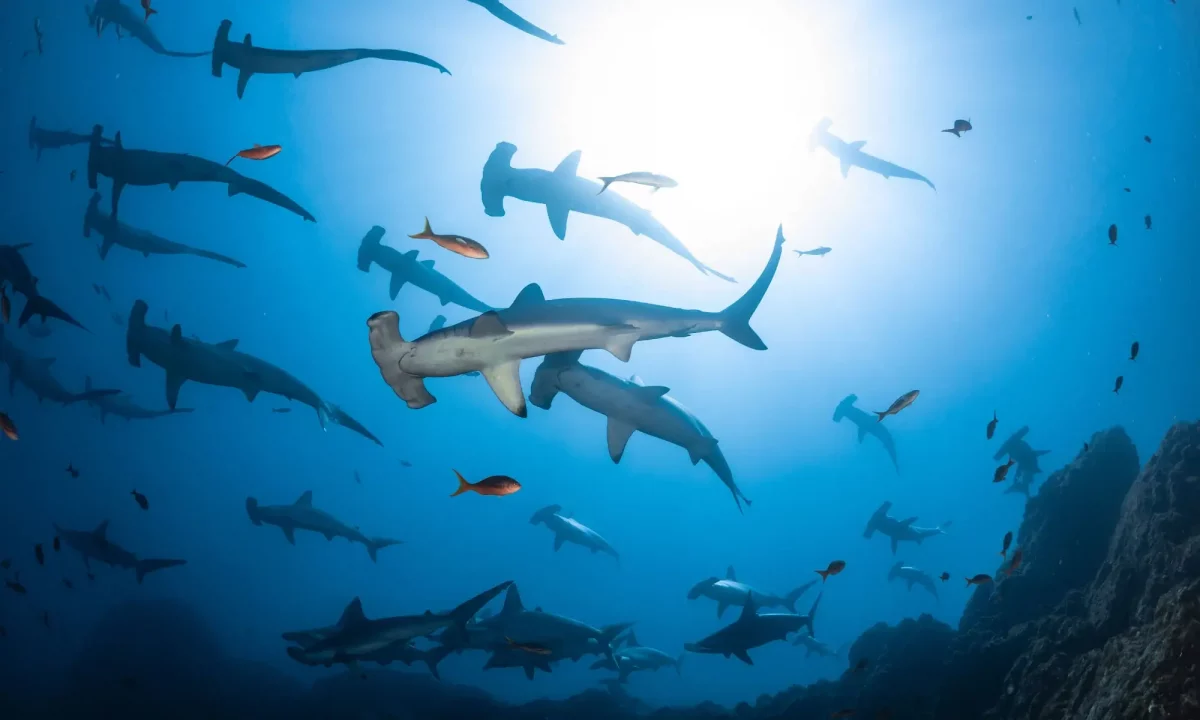
Each dive each dive is different. And learn to searching of this special spot where current, temperature and fish life makes a certain spot hot. And when it is hot….WOW!! This time we managed to get on the spot a few times and in a time we got in just in a massive wall of hammerhead sharks, 100 and more, just turning up from nowhere and as well we have been taken by surprise they are gone again. We have some massive Galapagos and not afraid at all, i whispered them in and a few time s it got enough excitments and stopped when they got to close. Interesting to see yellow fin tunas following Galapagos sharks and strike them self against the shark. Why do they do that? Is it a defense or to scratch parasites of them. Seen them do the same against the great White shark when we operate in Guadalupe Island.

The beautiful silver tip shark was there as well. Great two days diving at the rock. We could see a few humpbacks and hear a few, but not that many as last trip. We had one pass by a manta, it did not want to stay and play.

After last dive we started to go up north back to Cabo San Lucas. We are having a calm trip going up north, charing pictures and sleeping , reading books amd a few films and talking before we get back to Cabo San Lucas. No wish to go there..after days like this at sea. Diveguide Sten

Surface conditions: Long medium swell, did not bother much our loading of divers. 30C and mostly sunny

Underwater condition: almost no current at all, almost to calm under water. 24-25 C 75-77F Viz between 50 and 60 feet and up to 100 foot on the best dives.

Guest logs….

Perfect day of diving at Roca Partida! Four dives each one as exciting as the others. More sea life than one can comprehend at one time. Delicious yellowfin tuna, hammerheads, Galapagos, whitetip sharks and a supporting cast of thousands. The boat is wonderful and they give us cookies after every dive, what a perfect slice of life!!

Wow! What a day at Roca Partida. The Hammers were out in force today. We also had a few encounters with Wahoo. jodi

Excellent day, super visibility, and several cool shark encounters with Hammers, Galapagos, and the white-tips stacked on top of each other on their balconys. Huge schools and highways of massive fish – Wahoo, Tuna, Jacks, etc. Wasn’t totally over the top for us, but Sven and the Italians claim to have seen a wall of 100 maybe 200 hammerheads at the end of the 3rd dive (when unfortunately we had to surface due to empty tanks)… Too much fun!!

Un dia lleno de tiburones, emociones, profundidad y mucho buceo no paramos de asombrarnos de ser invitados por Galapagos, Silkies, Hammer a una fiesta de excitacion y excelentes fotografias.
Susana B.

Landing on top of giant manta rays on our first dive -Divemaster and guest log – english & spanish – April 4 – 5, 2010.

Tuesday, April 6th, 2010

We came up at Cabo Pearce after our traditional navy inspection. Setting the anchor with a decending line for making it it easy for divers out on the lava finger that have been poured out from Socorro Islands Mount Everman. We dive it down for our scuba divers and move it to the place close the cleaning stations so we can maximize our bottom time and air as it is fairly deep. A bit of effort especially a day like today when it was what we say here a little bit “windy” underwater, but then the line makes it as well safe to hand by hand working your self slowly  and safe and not getting swept away from the dive site.

I like Cabo Pearce cause if you don’t like current dive we can dive by the same lava flow that has a nice cheer wall and no current at all. It does not have as much pelagic life like the sharks and Tunas, but often mantas and I have seen diving humpback whales passing by the wall with a few ocations. Today we got the best result for us who dived the easy one. We dropped straigt on a manta at 60 ft she liked us direct and stayed with us and cirkeled us over and over again left and 5 minutes came back and in the end of the dive a second manta cirkeled us. During the whole dive we have moved a distance of 40 m no more. You can chase all over , but often it works best to take a good spot and sit and wait and see what comes. The rest of the day was a bit harder on the big animals. A few hammerheads sharks and passing mantas nice humpback whale songs. A few dolphins came in and had a look at us but not the once that we play with her, wonder where she is this dolpins that have been giving me a hug with her pectoral fins pulling me backward holding my fins… A Tiger shark passed over our heads in a quick pass, nice to see they are here and a few silvertips came in when we wispered them in.

On our  Humpback whale trip we had both in water sighting some with beautiful film shots from some of our guests and above water close sights. But some times you need patience, but here some times it can be so many that you dont know wich whale group you will try to approach.

We had two good days at Punta Tosca and now looking forward to Roca Partida Diveguide Sten.

Surface conditions: 30 C calm seas cloudy with some sun.
Underwater conditions: viz was down to 40 ft temp 24-25 c 76 F Strong current out on the outside lava finger.

La danza de las mantas fue el dia de hoy acompanada por el dulce canto de las ballenas, Punta Tosca nos trajo un sonido de esperanza y dulzura de la naturaleza, un atardecer acompanado de fotos y experiencias compartidas, que mas se puede pedir….
Susana B.

Hoy en Punta Tosca, trabajamos haciendo los censos de peces en invetebrados acompanados de tres mantas, que transmitieron su tranquilidad e hicieron de nuestro trabajo un dia de relajacion, que convinado con el azul del oceano, nos dan mas ganas de seguir explorarando las bellezas del oceano, aunado a esto, tuvimos musica de fondo, el canto de las ballenas que te hacian sentir la vibracion circundante, haciendo mas placentero el dia…. trabajando en el oceano, disfrutando de las bellezas arrecifales, mantas, y cantos de ballenas, es un trabajo que muchos me han de estar envidiando, me encanta mi trabajo jejeje…
Arturo Bocos.

Today in our dive in Punta Tosca we had a very beautiful sunlight dance with a big manta playing with us for several minutes. We had then the opportunity to face humpback whales and dolphins, both mom and baby that came near us during our morning zodiac trip …

Well, today was the day we all came here for. All of the divers had multiple manta sightings, a few hammerhead shark sightings, whale songs all day and for the icing on the cake, in-water humpback whale encounters! We still have the night-time silky shark snorkel ahead of us. We’ll remain anchored in the same protected bay overnight and will hopefully do it all again tomorrow. In-between all of this diving we have been pampered by the crew of the Nautilus Explorer, non-stop. Fantastic meals and snacks after every dive. Every crew member onboard does their best to accomodate every guest’s wish. It’s going to be real hard to go back home after this!
John D.

First dive this morning was awesome. At the bottom of the line was our first manta waiting. As we made our way up the ridge we encountered a large male green turtle, before coming across two more mantas hovering above the ridge. Back near the ascent line a curious bottlenose dolphin cruised by taking a good look at us. Only a few minutes after that I looked up to see a big hammerhead slightly above us, weaving slowly back and forth at around 40ft, and only 30 feet in front of the hammerhead another manta was cruising along. On our safety stop two mantas hovered nearby, eyeing us up curiously. Lots of humpbacks around today too giving us some great topside views.
G-diddy

Very candid guest report and video from a recent trip to Socorro during which the scuba diving didn’t quite measure up.. — April 1, 2010

Thursday, April 1st, 2010

Ken Kurtis trip video March 13/10

THE REVILLAGIGEDO ISLANDS (SOCORRO) MARCH 13-21, 2010

click here to see photos from this trip

It may not have been the trip we’d hoped for but we still had a memorable experience diving the Revillagigedo Islands of Mexico, better known as Socorro.

The trip started off on a semi-ominous note as we ran into the group that preceded us while we were checking out of our hotel and on our way down to the boat. They told us of a rather difficult crossing back to Cabo San Lucas at the end of their trip, with 10-foot seas most of the way. But we knew from having checked out swell reports prior to leaving L.A. that the swell was calming down so we hoped for a fairly smooth crossing and that’s pretty much what we got. So we started out on a promising note.

Our group this year consisted of 11 divers: Bruce & Christy Bonnett, Laurie Kasper, Ric Aceves, Steve Rosenfeld, Ron Roth, Lloyd Austin, Bob Willson, Joe Towers, Ted Wright, and me (Ken Kurtis). Everyone was fairly experienced and everyone (except me) would be making their first trip to Socorro.

Getting there is half the fun. The Revillagigedo Islands are comprised of four islands: San Benedicto, Socorro, Roca Partida, and Clarion. San Benedicto’s the closest and is about 230 miles away. Clarion’s way too far away to be on the regular itinerary so you just dive the first three. And Socorro Island been off limits for a few months because the Mexican navy, which has a small base on Socorro, has been doing “live fire” exercises. Luckily for us, Socorro opened back up during our trip so we were actually the first divers to dive the island in calendar year 2010.

But no matter which of the three islands you head for, it’s a long haul. You leave from Cabo San Lucas (we flew down the day before) and then it’s anywhere from a 22-26 hour run. So you spend at least one full day at sea. But that gives you time to go through briefings, check out your gear, assemble cameras and housings, get your sea legs, and just get your mind into the idea that you’ll soon be diving a place that’s off the generally-beaten path.

There are now three boats running trips to the area and we dove (as we did in 2008) with the Nautilus Explorer. We can’t say enough good things about the boat and especially the crew.

Simply put, the crew goes out of their way to do their best to maximize your enjoyment of the trip. They certainly can’t control the weather, the vis, or the animal life, but they can do their best to maximize the conditions you’re presented with and that’s exactly what the nautilus crew does, from the captain on down.

Of special note was the lead divemaster on our trip, Sten Johansson, who was also with us in 2008. Sten is simply hands-down one of the best DMs we’ve ever had the pleasure dealing with and really seems to take it personally when the animals that should be there aren’t or conditions aren’t what they’re meant to be. He’ll do whatever he can to point (or lead) people in the right direction or change the dive site or itinerary in search of better conditions if what you’re faced with aren’t ideal. On top of that, he’s a gentle soul AND speaks English, Swedish, Spanish, German, and a smattering of Italian.

We also want to single out old friend Enrique Aguilar, originally from the Don Jose in La Paz, who’s now the chef on the Nautilus. Aside from enjoying spending time with him, Enrique’s simply a wonderful chef, preparing tasty delights for all the meals every day. Breakfast was always eggs-to-order, sausage or ham, fruits, cereal, toast, oatmeal, and other choices. Lunches had a soup to start and usually three selections of entrée, one of which was always veggie. (And there were fresh-made cookies every day after lunch.) Dinners started with a salad and then there were combinations of chicken, beef, pork, or veggie for the main dish. It’s one of those trips where it was hard to lose weight, no matter how much you dive.

The boat itself is well laid out and in pretty decent shape (although I’m pushing them to update their 10-year-old TV in the salon to a nice, new LCD HDTV). Most of the staterooms (double-occupancy) are on the lower deck, including the “dorm room” single berths which are more like California-boat bunks and which will be eliminated during an upcoming renovation. The main deck has the dive deck (with camera station), salon, and galley. The second deck contains two “executive” suites, the hot tub and some hanging-out areas, and the third deck is the sundeck (or moon deck at night).

It varies by dive location, but diving is done off the main boat or from one of three skiffs: two rubber Zodiacs (each holding 6-8 divers), or the “tinny”, a large aluminum skiff that can easily handle up to 16 divers. It’s a giant stride when diving off the Nautilus or a back-roll when diving the others. Both the Nautilus and the tinny have ladders for fairly easy exit from the water. But the Zodiacs have a very small ladder so the best way up is to remove weights, remove tank/BC, and then either kick up and over the side (they’ve got lines to grab on to for assistance) or remove your fins and try to climb up the ladder.

Given the currents that can come up in the area, Socorro’s also a place when you want to have a safety sausage with you and a Dive Alert or some sort of air horn. If you don’t have them, the boat will lend them to you. But the safety sausage especially makes it a bit easier for you to be spotted if you surface away from the pick-up boat, or if the seas are up a bit. The horns are for emergency use only.

The actual diving in Socorro can range anywhere from mild to monstrous. We did dives where there was absolutely no current, but we also had the experience of pulling ourselves down a line hand-over-hand. And the currents can ebb and flow, so just because there’s no current at the beginning of your dive doesn’t mean there will be no current at the end of your dive.

In fact, I did one dive (at Cabo Pearce) where I followed the line down to about 60 feet, got out my reef hook, hooked in, and then just stayed tethered there for the entire 50-minute dive. I had one manta make two passes but he was fairly high up so I couldn’t get off a good shot. But it was very interesting over that period of time to experience the ebb and flow of the current, and to observe how the fish behaviors changed with the flow. When it was running, many of the animals stayed tucked close to the reef. As it slacked, they would spread out a bit, only to tuck back in as it picked back up. A reef hook might be a useful tool for you in you’re going down there, but not essential. I used mine occasionally, but not on every dive.

You will want a wetsuit with you. As this appears to be an El Nino year, the water’s a few degrees warmer than normal down in the Revillagigedos. I was generally reading 78-80°on my computer although others were reading as low as 75° . I wore a 3mm jumpsuit with a lycra hood and that was perfect for me. Others wore anything from a 3mm to a 5mm to a 7mm to even a drysuit. Whatever floats your boat.

The general daily routine was coffee anytime day or night, continental breakfast starting around 7AM, dive 1 at 7:45-ish, full breakfast at 9:30, dive 2 at 10:45, lunch around 12:30PM, dive 3 at 2:15PM, snack at 4PM, dive 4 at 4:45PM, cocktails at 6:30PM dinner around 7:30PM. There’s no night diving except for one night (at Socorro) where you can night snorkel with Silky Sharks if the conditions and sharks permit. In 2008, we had a dozen sharks behind the boat. This year, there were only two so I passed on this one.

Diving can be done on air or nitrox (32% – $20/day extra for the nitrox – worth it for the bottom time advantage) and you can choose between aluminum 80s or steel 100s ($32/trip extra for the steel). I chose to dive with the steel partly for the extra volume and partly for the weight advantage. In the water when the steel tanks are full, they’re 15 pounds negative (about 8 pounds negative at 500psi) which meant for me in a 3mm, I didn’t need weights at all. The negative buoyancy of the tank was more than ample. So if you go dive with Nautilus and choose a steel 100cf tank, bear in mind the weight of the tank. (In fact, that’s just a good idea in general.)

It’s hard to know what to say about the diving. On the one hand, how can you complain about a trip where you saw (1) Hammerheads, (2) Manta Rays, (3) Galapagos Sharks, (4) Whitetip Sharks, (5) Diamond Rays, (6) a Green Turtle, and even (7) mother & calf Humpback Whales (not to mention dozens and dozens of whales seen from the boat and heard underwater).

But it certainly wasn’t the Socorro that Socorro is promoted as being. A good example of that were our dives at The Boiler on San Benedicto. This is one of the signature dives of the Revillagigedos and the one where it’s billed as being the place where Manta Rays will essentially hover over your head and demand to be petted on the belly. In fact, I was just reading a post the other day on Wetpizel.com where a guy was talking about his Socorro trip a month before ours and was rhapsodizing about a Manta Ray at The Boiler who stayed with him for 40 minutes and continually interacted with him.

Our experience over the course of two dives at The Boiler was a little different. We saw exactly zero Mantas. The vis was really good, probably approaching 100’ but there was nary a manta in sight. In fact, I think on two dives at The Boiler (a combined 90 minutes underwater) we saw a grand total of three Whitetips and a Galapagos.

But the lack of big animals doesn’t mean lack of a good dive. In fact on our second dive at The Boiler, I had one of my favorite animal encounters and squeezed off my best shot of the whole trip.

We were on the second dive and had circled about halfway around The Boiler (which is a fairly vertical rock but which you can circumnavigate rather easily on a dive) when a female Mexican Hogfish came over to me. She must have seen her reflection in my dome port because she just kept staring at me. And even as I backed up a bit, she continued to approach me and literally stuck her nose almost on the port of the lens. You can see the results in the photos with this report under “Other Good Stuff” in the fourth row, first picture.

And just that one experience underscores something I learned a long time ago about diving: There’s plenty to see. But if you fixate on just one thing to the exclusion of everything else, you can turn what could be a wondrous dive into a crappy one.

In fact, on this trip I left my computer in the salon and had the screen saver set so that it would continuously display the stuff I’d already shot. I happened to walk by the computer one morning and saw two of the other guests (not from our group) watching my screen and one of them said, “Where was he diving? I didn’t see any of this stuff.” Well . . . yeah . . . because you probably weren’t looking. And especially in a place like Socorro, if you concentrate on looking up and out, where you’d expect to find the pelagics, but ignore down and in front of you, you might miss a lot of really cool stuff. You have to develop a 360° awareness. Otherwise . . ..

You might miss the octopus that was just sitting on a rock biding it’s time. There was a Leather Bass and two Bluefin Trevallies in the vicinity circling. In fact, that’s how I spotted the octo. And I thought it was interesting that none of these fish, who would probably appreciate a little taste of calamari, were making any attempt to strike at the octo.

But it turns out that what they do is simply follow the octo around as the octo hunts. And what they hope for is that when the octo sticks a tentacle into a crack or crevice to probe for a meal, the small fish that the octo forces out in to the open make for an easy meal and that’s when they strike Very clever hunting strategy. But you don’t observe any of that if you’d only got eyes for big things.

A similar thing happened on one of our final dives of the trip at Cabo Pearce. Most of the group went to the right and headed out to the point to hang in the current and keep an eye out for mantas. They got skunked. I, on the other hand, was content to drop at the same spot but headed left and was treated to a number of Clarion Damselfish. Now this fish in and of itself is no big deal and you probably wouldn’t travel all the way out here just to see them but I like them and I appreciate that fact that they’re endemic to the region, which means this is the only place in the world where they’re found. So I was quite content to give up the chance not to see a Manta to be able to find a fish that excites me. Plus we had a nice Diamond Ray, another pair of octos in love, and the whale singing was really loud.

And that, to me, is one of the great things about diving. You can sort of choose what it is that’s going to make your dive seem fulfilling. You can limit yourself to only one or two things but if you don’t see those, then you’ve stacked the deck against yourself. Or you can resolve to take whatever it is that Mother Nature gives you, and make the best of it.

So we didn’t come back from this trip saying, “Wow!! You won’t believe what I saw!!!” But that doesn’t mean we didn’t have a good time nor that the trip was memorable. It just wasn’t, as I said at the beginning, the trip we’d expected and hoped for.

That all being said . . .

There’s a lot to be said for the non-pelagic diving at the Revillagigedos. We saw octopuses all over the place. One thing that amazed me was that there were a lot of times I saw TWO octopuses either occupying the same hole or side by side. In fact, there was one time when there were two octos sitting together and one had a tentacle draped over the other one like a schoolboy at the movies with his arm around his girl’s shoulder.

I always like seeing the Clarion Angels and the Redtailed Triggers. They’re both brightly-colored, are great photo subjects, and are just pleasant to look at. They also both tend to congregate in large groups which makes for a good picture. I didn’t see it this time, but DM Sten carries with him an empty plastic soda bottle and when he’s underwater he crinkles it and when the Clarions and the Redtails hear that sound, they come running to Sten like their lives depended on it. Really fun to watch and something I’ve got to remember to try in SoCal waters to see how the Garibaldi react.

And let’s not forget the whales. Humpback Whales are at all the islands in profusion and you constantly see them blowing on the surface, tail-slapping, and even breaching. There are numerous mother/calf pairs, usually with a larger male escort, but the best part about this is being underwater. You don’t see the whales, but you hear them. They are constantly singing, sometimes with the low tones of the males, and sometimes with the higher-pitched tones of the females answering them. And you hear it on just about every dive, especially if you take the time to stop and pause breathing for a moment. It’s really quite a magical thing to experience.

Nautilus also tried something new with us which was an in-water whale experience. We divided into four groups of 6 each and, over the course of four attempts in two days, went out to try to do a whale snorkel. (This replaced one of the day dives for each group.) Sten had actually spent time at the Silverbanks in the Dominican Republic to study the techniques used there and adapt them for Socorro. We were his quite-willing guinea pigs.

The plan was to find a mother/calf pair at the surface, get within a reasonable distance, quietly enter the water, kick over to where they were, and see if they’d hang around. Although we didn’t get any long interactions, just about everybody got at least a glimpse of a whale underwater and everyone said it was definitely a worthwhile thing to attempt. It seems like Nautilus will keep doing this and we enjoyed giving it a shot.

We had one really memorable turtle encounter at Roca Partida (where we could only spend one day due to a predicted building swell) when a bunch of us ran into a Green Turtle who was very curious about each individual diver and was especially curious about the flashing things at each end of my camera, and came over to investigate. Like I‘ve said many times before, the animals are as curious at times about us as we are about them.

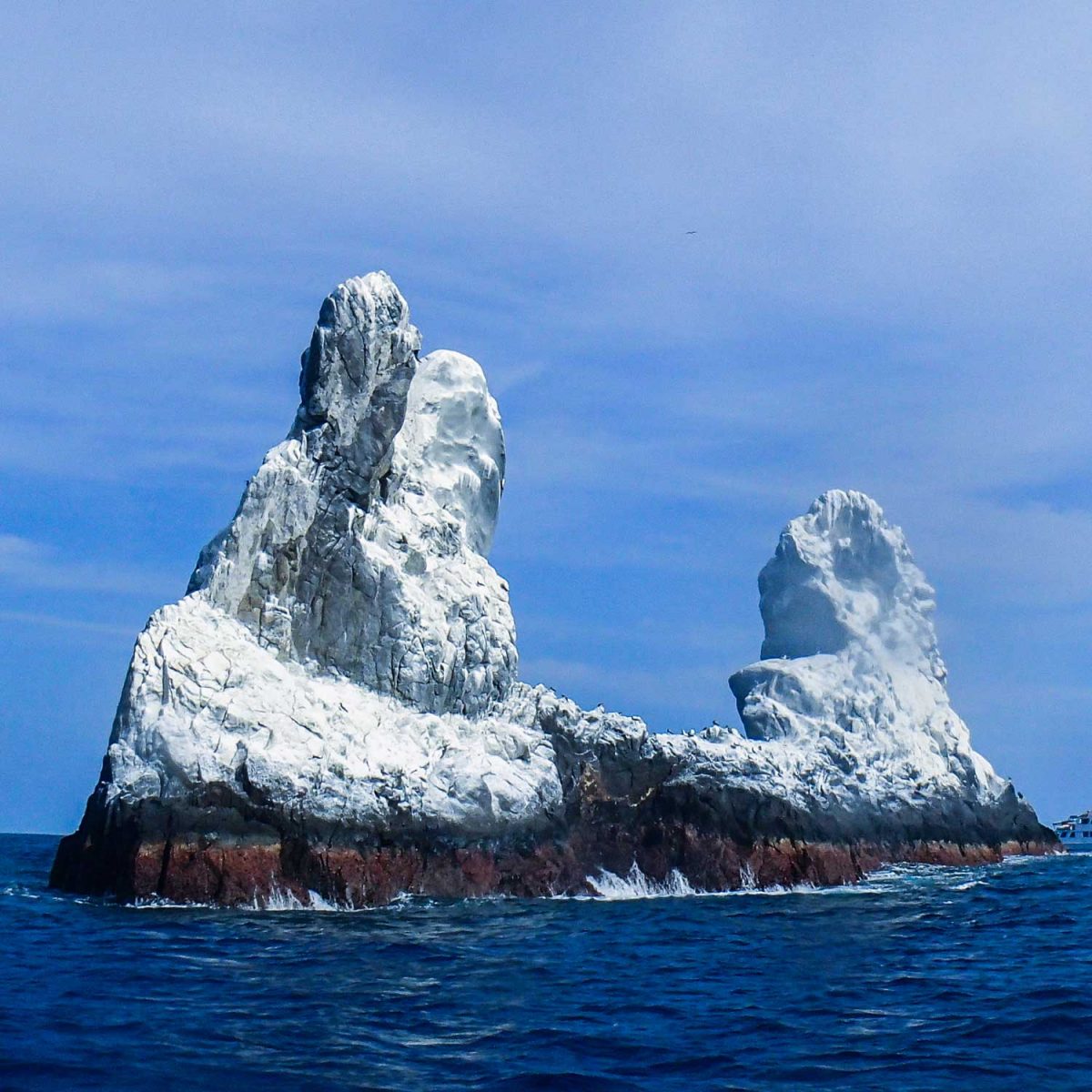
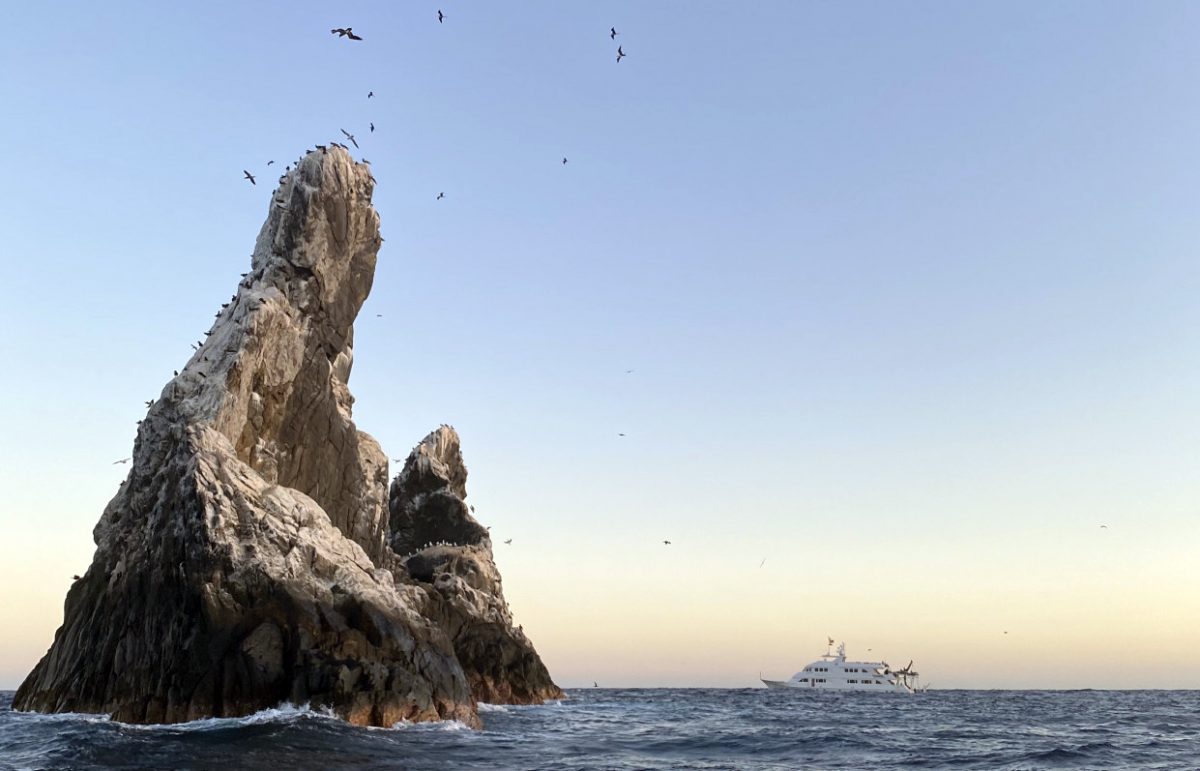
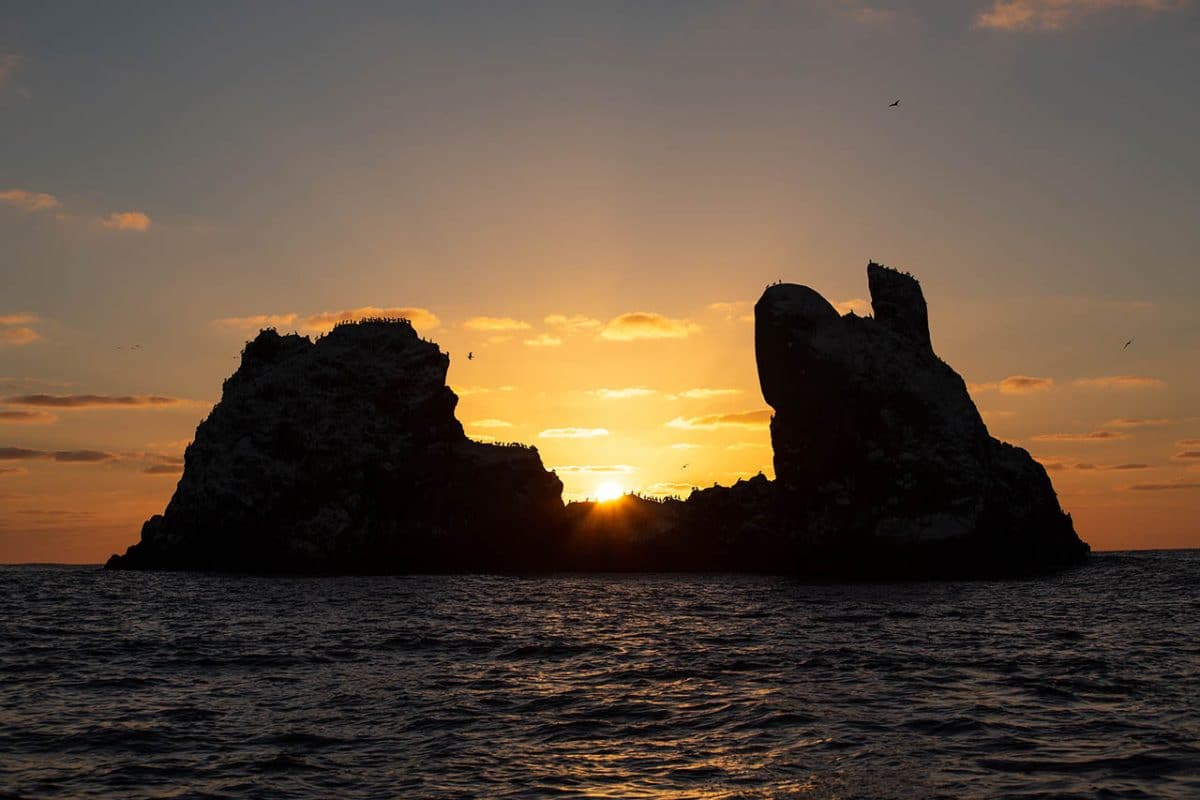
Roca Partida is a really great dive but you’ve got to be careful there as well. First of all, don’t lose sight of the fact that it’s about 80 miles away from the nearest land mass (Socorro Island) so you don’t want to be out there if the weather turns. Secondly, it’s not very big, maybe 150 feet long and 50 feet wide. And all around the rock, it’s pretty much a vertical drop into water that far exceeds recreational dive depths, let alone the MOD of nitrox32. But it’s a fantastic dive.

Even if you see nothing else, there’s a 100% chance you’ll see dozens of Whitetip Sharks all nestled together, seemingly resting, along the eastern side of Roca in what are known as “The Shark Balconies” which are small ledges and flat areas on the wall. And you can pretty much go nose-to-nose with these guys without spooking them as long as you move slowly and stealthily. That area’s always fascinated me and this trip was no exception.

Roca’s also a place for good vis (we had anywhere from 60-100 feet) and you never know what you’re going to find. But if you venture off the rock, you’ve really got to keep checking behind you to make sure you can still see something lest you “go blue” which is the phrase Nautilus uses to mean you’re out of sight of the topography and any reference point. It’s a big no-no and calls for an immediate end to the dive so that you can be on the surface before you drift too far away.

But at Roca, you probably need to swim out at least a little to find the shark activity. We noticed some hammers off in the blue on our first dive and on my fourth dive, I ran into five Galapagos and one Silvertip just at the edge of our visibility. So you’ve got to take some chances but you’ve got to be careful.

You’ve also really got to watch your depth at Roca, especially when making multiple dives. Not only can you get yourself into deco trouble (no matter what you’re diving), but with nitrox, you have the added risk of oxygen toxicity if you violate depth limits. So you’ve got to keep an eye on that as well, and don’t get so excited about shark or other animal sightings that you start following them down and “suddenly” find yourself at 200 feet. (Given that the bottom at Roca’s around 250‘, that’s not an impossible scenario.) So it’s great diving out there but just use your head.

Unfortunately for us on this trip, we could only spend one day at Roca. (The normal sked calls for two days at Roca.) In fact, the whole story of this trip was “You should have been here last week.” The folks at Nautilus say this has been one of their most productive years ever in terms of the number and quality of the big-animal encounters. At least it was right up until our trip. And during our time there, it as almost like the animals were all State of California employees who had been furloughed for the week. I don’t know where they went (nor did the crew) but they were few and far between. Despite the best efforts of the crew, it simply wasn’t to be the week we’d hoped for. And we know that happens sometimes. It’s Mother Nature and you take the hand you’re dealt. (The parting shot were the 6-8’ seas all the way back which meant it took us a little over 30 hours to get back to Cabo.)

But the mark of a great organization is not how you deal with triumph but how you dealt with less-than-ideal outcomes. So we were all very surprised and pleased to find this note from Nautilus owner Mike Lever in our e-mail boxes a week after we got back:

“Mother Ocean gives us an enormous amount but she also takes away. Our 2009/2010 season on the Nautilus Explorer had been our most outstanding Socorro diving ever including more sharks than before and rapidly evolving amazing interaction with bottlenose dolphins as well as the regular cast of characters.

“We’ve logged the experiences online. Our guests have written blog entries about it. Our fan base on Facebook is fantastic. And then we had your trip of last week with much lower visibility than normal, less animals than normal and some pretty tough weather. For the first time in a long time, we are only able to offer 1 day of diving at Roca Partida. Yes it’s Mother Ocean but we still feel really badly for everyone onboard. Accordingly, we would like to extend to those who were onboard our March 13 trip, a $750 credit towards any future Nautilus booking of your choice. That’s our way of saying that it’s not fair that you were on the only ‘less than excellent diving’ Socorro trip this season and we hope this will help make up for that.”

Pretty classy move and just one more reason why I like dealing with Nautilus. (In fact, one of our divers has already cashed in his credit for a Guadalupe trip with Nautilus for this October.) This wasn’t something we’d asked for or even something we’d contemplated asking for. But to know that they feel a need to make amends for conditions totally out of their control speaks volumes about the ethics and values of the organization. Like I said earlier, they seem to take it personally and that’s a good thing.

Was it a good trip? Absolutely. Was it the trip we wanted? No. Will we go back again? Definitely. I’ve already sent an e-mail to our group suggesting maybe we use the credit towards a trip in March, 2011, and give the Revillagigedos another shot.

My mother always used to tell me, “Nothing ventured, nothing gained.” We may still not get that magical trip by trying again. But I can pretty much guarantee that no Mantas or Hammerheads are going to come swimming up to my place in Westwood. So you can rest assured that we’ll be going back south to the Revillagigedo Islands again and you can bet you bottom dollar that we’ll be doing it with our good friends on the Nautilus Explorer.

© 2010 Reef Seekers Dive Co. All Rights Reserved.

Guests dance the “Samba” after Socorro Island Giant Manta Ray encounter – divemaster log March 25, 2010.

Friday, March 26th, 2010

This is our third day of diving on this trip, and the weather has been great since leaving Cabo San Lucas. It is good to see old faces back with us again. The first day of diving at San Benedicto Island, at the dive site “the Canyon” the scalloped hammerhead shark came to the date and so close that even with the poor visibility (10 ft), we were able to see them. Water temp great, 76 +/-1F, if you wear a 5mm full suit with hood no problem. Current was mild. Next day visibility improve a lot, 40+ feet at the “boiler” and made our Brazilian guests dance Samba after seeing our magnificent giant Manta Ray dancing around them. They told me they never saw one even they tried about 13 times to see them in a place called Laje de Santos, Brazil, with reputation of manta encounters. It was great to see their big smiles from ear to ear.

Roca Partida, my favorite place where the shark fanatic can make their dreams come true, were in 30 minutes bottom time you can see scalloped hammerheads, galapagos, silkies, white tip reef sharks. That is what happened today, not to mention the playful dolphins that greeted the vessel on arrival and waited patiently for us to get in the water to play with all the divers, and the powerful 100lb++ yellowfin tuna hunting. Visibility great 70ft plus, temp 77F with no thermocline above 100ft. A great day, sunny with light breeze from the North that refreshed our noon day. A fantastic day and of course, tonight for those who still have the energy we will learn how to dance Samba with our Brazilian friends, what a day!  Don’t get jealous, get onboard!
Hasta la vista,
Divemaster Pedro

Surface conditions: swell mild to moderate, winds light (5-15kts max), skies mostly clear, air temp 74-78F.
Diving conditions: water temp 76F, current mild to moderate, visibility 40-70ft+

A note from Captain Mike:

Mother Ocean gives us an enormous amount but she also takes away. Our 2009/2010 season on the Nautilus Explorer had been our most outstanding Socorro diving ever including more sharks than before and rapidly evolving amazing interaction with bottlenoise dolphins as well as the regular cast of characters.
We’ve logged the experiences online.  Our guests have written blog entries about it. Our “fan” base on facebook is fantastic.  And then we had your trip of last week with much lower visibility than normal, less animals than normal and some pretty tough weather.   For the first time in a long time, we are only able to offer 1 day of diving at Roca Partida.  Yes it’s Mother Ocean but we still feel really badly for everyone onboard.  Accordingly, we would like to extend to those who were onboard our March 13 trip, a $750 credit  towards any future Nautilus booking of your choice. That’s our way of saying that it’s not fair that you were on the only “less than excellent diving” Socorro trip this season and we hope this will help make up for that.
Sincerely,
Captain Mike

First giant manta mating ever caught on film plus Socorro dive report from last trip – March 22, 2010.

Monday, March 22nd, 2010

Check this out!!!  Mantas mating!!!!

Well, I guess we all know that our favourite big animals  -  giant mantas and sharks –  don’t always co-operate on every trip to Socorro Island.   While Socorro was closed recently for navy exercices, scuba diving continued unabated at nearby San Benedicto Island and Roca Partida and the diving was some of the best that we have ever seen in the islands:   large schools of hundreds of hammerhead sharks passing close by our scuba divers  (our secret technique is to dive commando style and stay tucked right in the rocks a la Cocos style to avoid scaring the hammers),  lots of fantastic friendly interaction with the giant manta rays, schools of silky and silvertip sharks (yes  –>>  schools!!), yellow fin tuna, extremely friendly bottlenose dolphins and such.    Trouble was that the very big seas and residual wavetrain of a couple of weeks ago stirred up the sediment and particulate and vis was unusually low on our last trip. First time in a long time that we didn’t get the sightings that we are used to. While such is the nature of oceanic big animal diving, we are getting in touch with each guest on last week’s trip and will be making them an offer they hopefully can’t refuse  to come back and experience the “the real Socorro”.    Trust and hope that the vis is back to normal on the next trip. Captain Mike

White sharks aren’t safe but our cages are…

Friday, March 19th, 2010

I am often asked if diving with great white sharks of Guadalupe Island is safe.  My answer is  HECK NO!!!   You are diving with apex predators that are 18 feet long with the girth of a volkswagen van.   There is NOTHING safe about these animals. BUT our cages our safe.  They were engineered and certified by a naval architect. They were built in a shipyard and built strong like the Nautilus Explorer.  They are inspected and get an annual shipyard refit.  And they were designed with the idea of avoiding any possible injury to inquisitive white sharks by the use of schedule 80 aluminum pipe (which means the pipe is very thick), radiused corners, no sharp edges and very, very strong.  Our favourite whiteys are welcome to nudge and test the cages all day long and as the photo shows, there will be no ill effect to either the sharks or the divers.   Captain Mike.  ps.  check out the visibility in the photo. We typically see 125′ + vis on our Guadalupe Island trips.

—– crew blog entry below from Bayu, one of our hardest working deckhands ever —–

I am Bayu, deckhand on the Nautilus Explorer since may 2009 aiming for getting in future my engineer ticket.  Yesterday we have been at Roca Partida. It is a weird place but cool cause I never seen a rock like that in the middle of nowhere. First time I saw RP I was wondering what that white was on the rock and I did not it expect it was covered with , bird pop. Today I was driving the skiff with the divers again , but today was different cause I had several dolpins around my skiff. And when I cleaned off the algie of the Nautilus Explorer i saw Silkie sharks direct under the boat, that was cool.   Everything about working onboard the Nautilus is very cool.  I love it.

Photo credit: Eurisko Photography by Don Carpenter

image

Stranded tanker Sichem Osprey refloated after grounding on remote Clipperton Atoll. The French navy reports that the vessel was towed off the barrier reef after lightering soyabean oil, tallow and xylene onto a second tanker. The hull was intact and the 2009-built ship was able to continue on to Mexico without any environmental damage. March 9, 2010.

Tuesday, March 9th, 2010

PHEWWWWWW!!!   We have been feeling sick about this ever since the Sichem Osprey grounded on our favourite atoll on February 10th..  We were especially nervous when the tsumani went through.   Hard to believe that the Eitzen product tanker managed by Glasgow-based V.Ships Shipmanagement  ran onto the island at full speed and I can only speculate on what must have been going on (or not going on to be more accurate) in the wheelhouse.      The double hulled, 25,431 dwt tanker is under Maltese flag with a crew of 19 and was heading from Panama to South Korea when the grounding occurred.

We could all too easily imagine the horrendous impact of 10,000 tons of xylene or soyabean oil on the 5,000,000 land crabs and 500,000 booby birds on the atoll,  the green moray eels that are free-swimming EVERYWHERE you look  (and even coming out of the water to chase the terrestrial land crabs!!!  yes, I saw that with my own eyes 2 years ago!!), the endemic Clipperton angel fish on the outer reef and the Canadian geese bobbing around on the inner lagoon.    It has been a frightening time and we are extremely grateful and happy about the good outcome.

Kudos and job very well done to the government of France, the French Polynesian authorities who administer the island and the salvors working under the supervision of Svitzer Salvange.   Stay tuned for reports from our next Clipperton expedition.   Captain Mike

Guest log –>>   Roca Partida, Socorro Island.  March 8, 2010.  Rough seas but great diving conditions with water temps 76 degrees

Saw four nice hammerhead sharks at Roca Partida today, a little bigger than the fish in Kentucky! Getting back into the boat was like an amusement ride. Very exciting!
David

Although it was a bit like a washing machine at the surface, the depths were calm, clear and full of splendid animals! Had four great dives today, and we’re looking forward to four more tomorrow. Here’s to the continued hope of humpback whales!
Karen

Premiere journee a Roca partida, ce petit caillou perdu au beau milieu de nulle part…
Apres une premiere plongee pour apprivoiser le lieu, ce fut un veritable festival.
Jojo le merou (3m selon certains…) viendra vous accueillir a 30m sur la face ouest du rocher au milieu d enormes bancs de poissons en tout genre….
La pointe nord, quant a elle, est gavee de pointes blanches sur 15m et il vous faudra aller titiller les 40m pour trouver les marteaux…superbes rencontres!
La face Est sert plutot de dortoir a requins avec ses nombreuses etageres..
Bref un veritable festival…vivement demain qu on remette ca…
A visiter egalement : orgie entre murene et pointes blanches, une honte!!!! Pour la troisieme plongee, a voir la sieste des requins, sieste crapuleuse a 10 requins colles les uns contre les autres, surveilles par une grosse loche, qui nous suivait pour verifier si on ne les derangeait pas.


Diving at Rocal Partida with a Tsunami warning – what it was like. Divemaster Log for 27 – 28 February, 2010.

Tuesday, March 2nd, 2010

Location: Roca Partida, Socorro island, Baja California, Mexico

Approaching Roca Partida in the morning we got a Tsunami warning via our Inmarsat communicating a earth quake outside of the coast of Chile on a scale of 8.8
We got the information that it would arrive around 1045 AM at our site.  We are in this time very thankful of Nautilus Explorer’s well equipped communication possibilities. At this time we could as well warn a neighbouring dive vessel that did not have it and assist them getting out of problems. So they stopped their operation and got out on deep water.

We decided to stay  2 Nautical miles from Roca Partida at 10000 ft of water and wait it out while we waited for more information from our head office. We could not be in a safer spot and everybody was calm.  What we where worried about would not be a big waves but a stronger current and better to be safe the sorry as they say.  Well after a bit of drama in the morning we approach the rock and started diving. The visibility was actually poor for Roca Partida , but the action was there! Lots of sharks!! And the second day was even better. Big schools of hammerhead sharks. A bit deeper down big Galapagos sharks. And cruising silvertip sharks.

Some of our scuba divers came up shouting of happiness after been diving with a humpback whale a mother and Calf and had also film of it.   The humpback whales came very close to us when we were out in the zodiac inflatables and we heard them singing the whale song on almost all dives. It is the male Humpback whale that stayes on his head and sing.

The last dive was probably the best one , the water got clear and we had so many sharks mostly hammerheads and we saw them over and over again. Last was a group of maybe a houndred. Nice ending!  Divemaster Sten

Surface conditions: 3-5 ft swell , sunny and 30 C , very nice and calm

Underwater conditions: viz not so good, about 50 ft when better up to 90ft. slow easy current very little surge.

The diver started kicking like a dolphin and got the 5 dolphins around him so excited they started spinning around him like a top – Guest and Captain Log – 20 FEB 2010

Sunday, February 21st, 2010

Today the guests and crew of the Nautilus Explorer are nearing the end of an 8 day adventure trip to Socorro Island.  Well, San Benedicto Island and Roca Partida to be more accurate. Later tonight we will arrive back at Cabo San Lucas.  This his has been an adventure for our guests, and for myself as well.  I have spent many years working on small cargo vessels, tugs, fishing boats and an expedition passenger vessel on the British Columbia coast. Spending as much time as I have on the water, it’s not hard to start thinking that you have seen it all, at least in terms of sea life. Whales, porpoises, orca, sea lions are almost an every day occurrence around Vancouver Island but here, it is different. Yesterday we were at Roca Partida. I was standing by in the skiff while the scuba  divers were down. Looking down into the clear water, I was amazed at the amount of reef fish I could see. It was as if there was a layer of them. All shapes and colours. I heard a splash, and looked up to see a group of bottlenose dolphins charging toward me and passing close by the side of the skiff. At the same moment, a pair of humpback whales came out of the water and landed on their backs a few hundred yards from me. Taking all this in, I was thinking, “This is what I am seeing up here. I wonder what they are seeing down below”. I didn’t have to wait long for the answer. As one of our guests (a lady from Germany) came up the ladder at the back of the skiff, she pulled off her mask and yelled” the whales are singing”. Over all, it has been a trip with regular sightings of Giant Mantas (up to 4 at the once) Hammerhead sharks, (sometimes a school of them) and all sorts of other creatures. For me the greatest pleasure is to see that kind of excitement in someone’s face after a dive.   Captain Ted.

What a week we have had! Dancing Mantas, Singing Whales, Hunting Tunas, Playful Dolphins, and sharks so close you could nearly reach out and touch them. At San Benedicto, we dove our usual dive sites, The Canyon and The Boiler, and we also did a couple of exploratory dives: one along the cliffs and one on the northern point of the island. These dives, although interesting proved that The Canyon is where the action is happening right now; multiple friendly Mantas, large schools of Hammerheads, Humpbacks singing so close that your body vibrates and you just know that they have to be right there… about to materialize in front of you.   Roca Partida is full of life. Nearly every dive, we had the playful Bottlenose Dolphins coming in to zoom around the divers and blow bubbles at them. One diver, kicking like a dolphin himself, got the dolphins so excited; all five dolphins started spinning around him like a top. This week we had mantas too! At least three different mantas were seen during out stay at Roca Partida. There were a couple of different tuna schools circling the rock, a school of hundreds of smaller tuna and another school of giants. These big fish are strong and powerful. It is a treat to see their quickness and grace as they send the schools of smaller fish fleeing as they hunt. Several different species of sharks were sighted on every dive: sleepy White Tip Reef Sharks, Schooling Scalloped Hammerheads, well-fed Galapagos Sharks, Daring Dusky Sharks, Sleek Silky Sharks, and Graceful Silvertip Sharks.   Towards the end of the day, with light levels were starting to fade, just off the southern cleaning station, a Giant Manta was coming in to be cleaned. A curious Silky shark had been hanging around as well. In a quick flash, the Silky Shark made a dash for the top of the manta, trying to bite off one of the Remora that was peacefully riding there. With a quick flip of her wings, the manta rolled her body up and out of the shark’s way. Just then, a Bottlenose Dolphin came in to aid the manta and began chasing the Silky Shark. The three circled for a moment, and then the shark retreated into the blue. The manta went back to the cleaning station and peace was restored once again. When the divers surfaced, they could not believe what had just happened. Every dive has been unique special.

Surface Conditions: Wind- Slightly Breezy, Sky- Clear to Partly Cloudy, Swell- Mild.

Underwater Conditions: Visibility- 40-100’, Temperature- 74-75 F, Current Slight to non-existant.